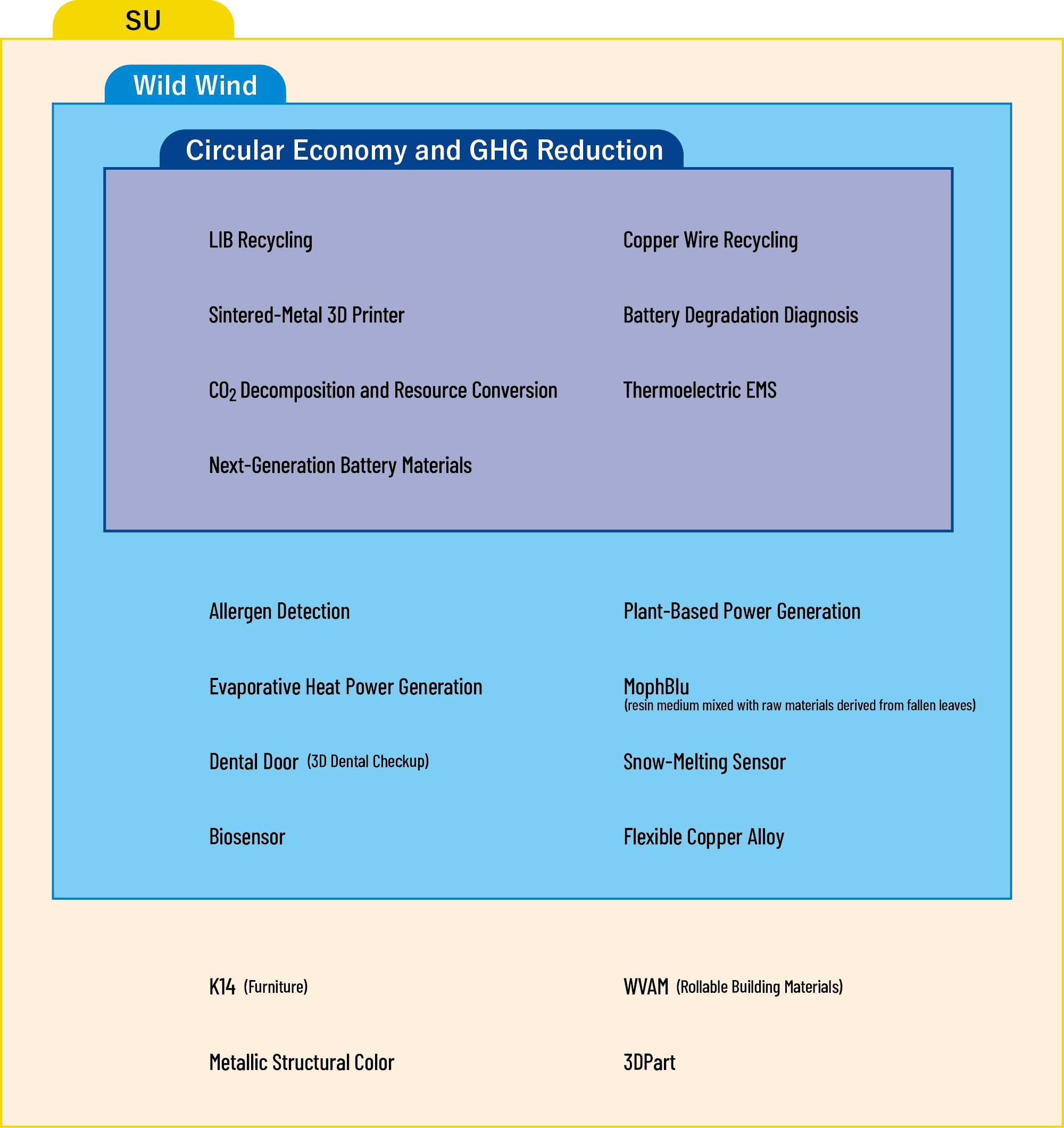
Wild Wind is part of SU,
Mitsubishi Materials’
new business creation brand.
Wild Wind 2026 Mitsubishi Materials Acceleration Program
For the fourth edition of Wild Wind, we are once again seeking partners to co-create new businesses.
Mitsubishi Materials Corporation (MMC) has one of Japan’s leading technology teams, with distinctive R&D capabilities across a wide range of fields, development facilities, and extensive knowledge and data accumulated over many years.
This year, we will again launch an acceleration program to promote co-creation with external partners and jointly develop new businesses based on themes in fields where future commercialization is expected.
Through SU, we propose and advance themes inspired by curiosity and supported by our accumulated technologies, without being limited to specific fields or timeframes. In Wild Wind, the focus areas and MMC-proposed themes are updated each year.
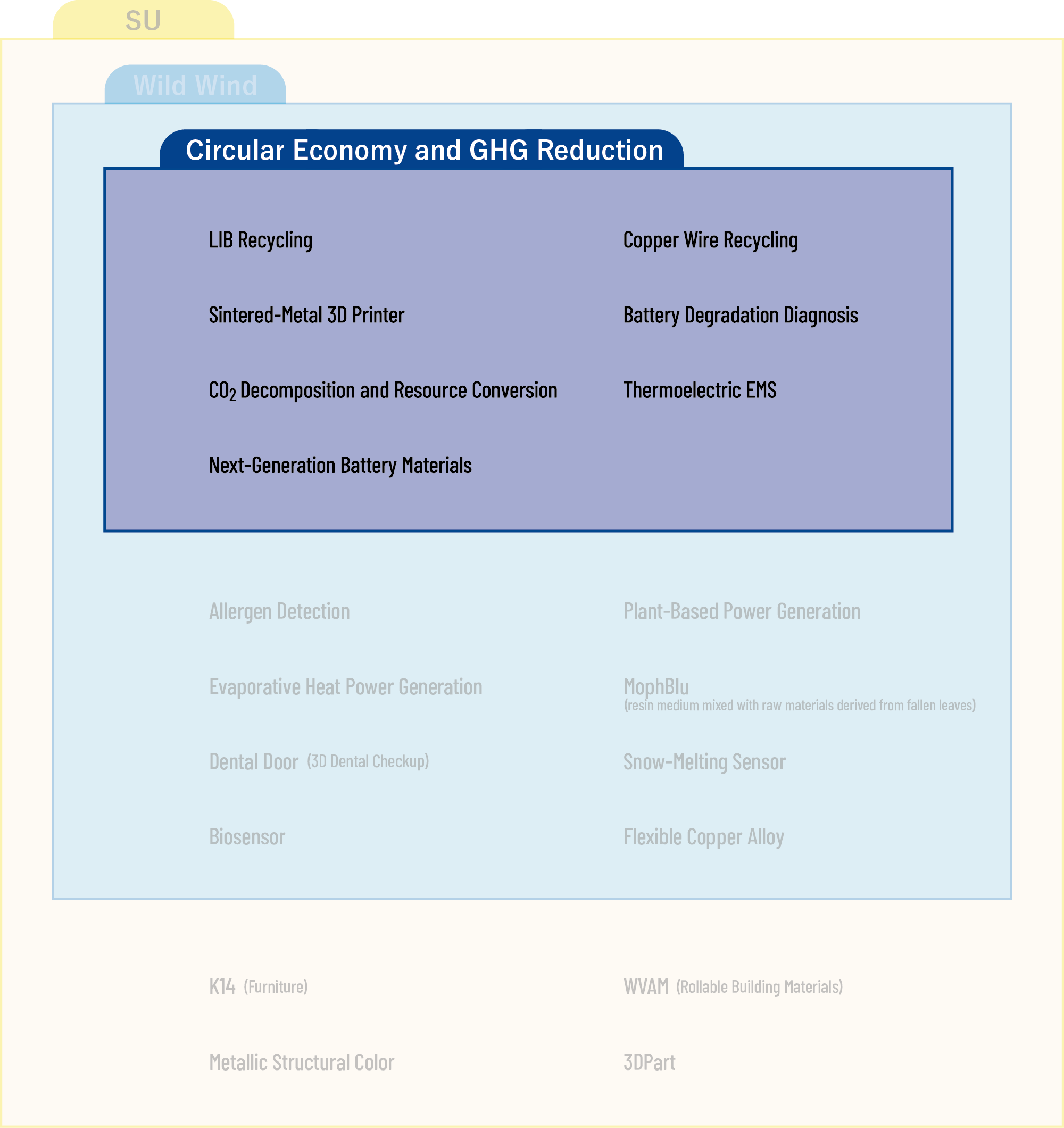
This year, we are placing particular focus on themes related to “Circular Economy and GHG Reduction.”
We welcome partners who are eager to co-create businesses in these areas and look forward to receiving your applications.
Areas We Are Focusing On
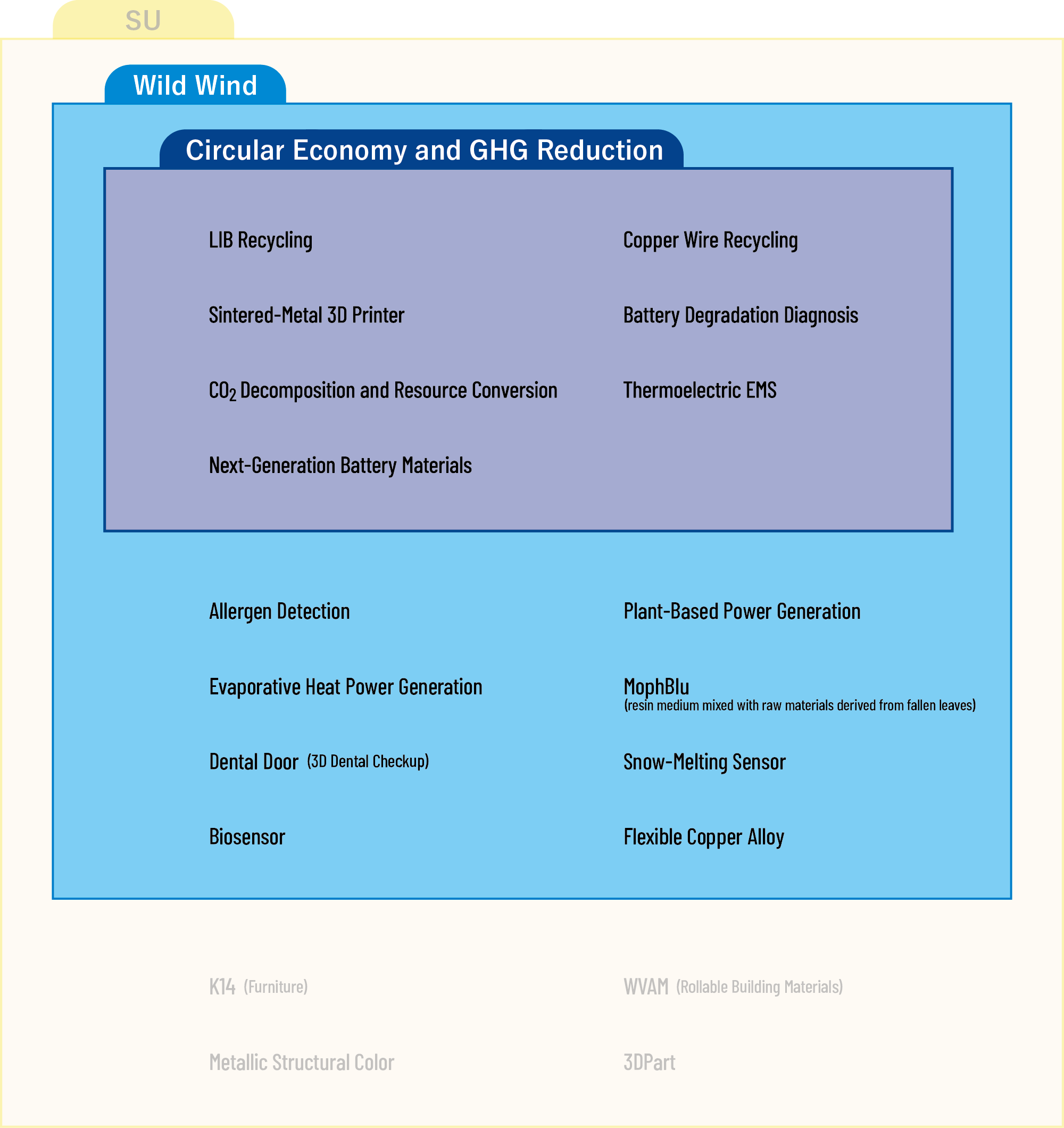
The map below shows themes we have previously explored, themes currently underway, and related existing businesses. In addition to the areas shown here, Mitsubishi Materials is also focusing on growth fields such as next-generation energy, mobility materials, and semiconductor materials.
Please click the buttons in the diagram for details.
Construction of a Pilot Plant to Establish Lithium-Ion Battery Recycling Technology
Taking the Next Step Toward Commercializing a Rare Metal Refining Business from Black Mass *From the Company’s press release dated December 6, 2023
Mitsubishi Materials Corporation will construct a pilot plant for further development as the next step toward establishing lithium-ion battery (hereinafter, “LIB”) recycling technology.
Rare metals used as materials for LIBs, such as lithium, cobalt, and nickel, are expected to face supply shortages in the near future. This has become an important issue for growth strategies across industry as a whole, and measures are being taken including the development of underground resources, the recycling of materials, and the development of alternative materials.
At our company, we have been conducting technology development through small-scale testing toward the commercialization of a business to recover and refine rare metals such as lithium, cobalt, and nickel from black mass(*1). As certain results have now been achieved, we will take the next step by constructing a pilot plant within the premises of the Onahama Smelter of Onahama Smelting and Refining Co., Ltd. in Iwaki City, Fukushima Prefecture, and will pursue further technology development toward the commercialization of highly efficient recovery of rare metals from black mass.
(*1) Concentrated residue containing lithium, cobalt, and nickel obtained by discharging, drying, crushing, and sorting LIBs.
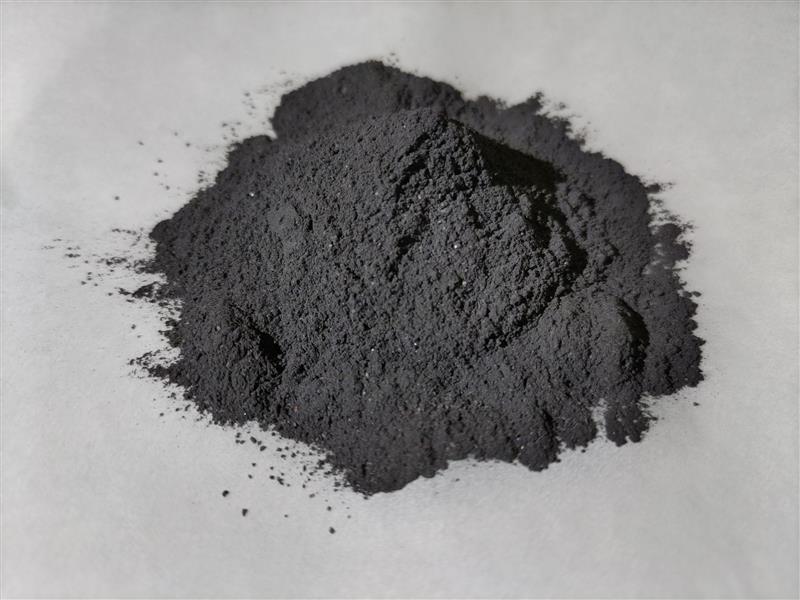
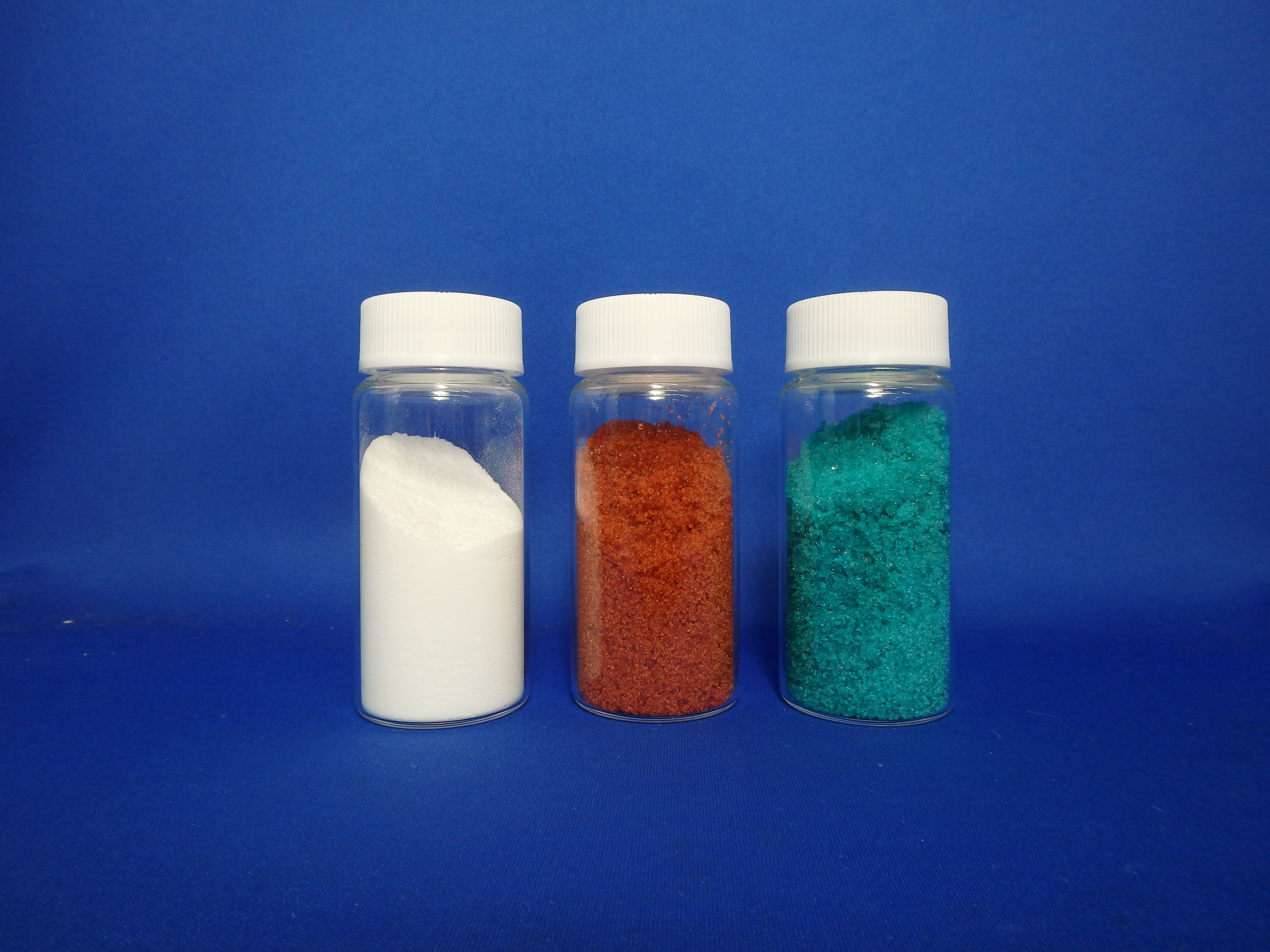
Raw material: Black mass derived from LIBsProducts (left to right): Lithium Carbonate, Cobalt Sulfate, and Nickel Sulfate
Technical development related to the construction of this pilot plant is being supported by the Ministry of Economy, Trade and Industry (METI) under its certified Plan for Securing a Stable Supply of Critical Minerals (Certification No. 2023 Critical Minerals No. 1-1).
Guided by our vision of “Designing circulation for people, society, and the planet to realize a sustainable future,” we will continue leveraging our recycling technologies to advance a circular economy and contribute to a more sustainable society.
Pilot Plant Overview
Feedstock:
Black Mass from End-of-Life Lithium-ion Batteries
Products:
Battery-Grade Lithium Carbonate, Nickel Sulfate, and Cobalt Sulfate
Research and Development on Recycling Used Cables Generated in Railway Operations to Begin on April 1
—Aiming to establish a system to reduce waste through the circulation of copper and covering materials— *From the Company’s press release dated March 17, 2025
Tohoku University, Tokyu Corporation, Tokyu Railways Co., Ltd., and Mitsubishi Materials Corporation will begin research and development on recycling used cables generated in railway operations on Tuesday, April 1, 2025. This R&D project has been selected for the Environment Research and Technology Development Fund for fiscal 2025 by the Environmental Restoration and Conservation Agency (ERCA), and will be carried out over a three-year period through March 2028.
In this R&D project, cables from Tokyu Railways’ electrical facilities and signal cables installed along railway tracks, which are currently disposed of, will be used as model cables. The project will apply the separation principle of a wet separation method (solvent swelling + impact application)*, which has been developed by Tohoku University in collaboration with Mitsubishi Materials, to develop a new wet separation method for separating cables into copper wires and covering materials. The target cables have high strength so that they can withstand the specific outdoor environment of railway operations. However, because the covered wires are thin, existing covered-wire processing technologies have difficulty separating copper wires and covering materials with high purity. As a result, the materials that can currently be recovered as recyclable resources from used cables are limited. Tokyu Railways generates approximately 10 tons of such used cables per year on average. The project aims to use the copper wires and covering materials recovered through this technology to recycle them into recycled cables for use by Tokyu Railways and the broader railway industry. In addition, by quantifying the reduction in CO2 emissions and the economic benefits achieved through recycling, the project will examine the potential future impact on the railway industry.
This R&D project has been realized through collaboration among four parties: Tohoku University, which has led research and technology development on wet separation methods for covered wires; Tokyu Corporation, which formulated its “Environmental Vision 2030” in March 2022 toward the realization of a decarbonized and circular society and aims to reduce waste by 10% by 2030; Tokyu Railways, which seeks to solve environmental and social issues through railway operations by creating new value and contributing through its business characteristics toward a decarbonized and circular society; and Mitsubishi Materials, which possesses advanced smelting and recycling technologies for nonferrous metals including copper.
Through this R&D project, the parties aim to enable cables used in railway operations to be recycled as recycled cables. In the future, by expanding this initiative to the railway industry and other industries, they seek to establish a system that reduces waste as much as possible and promotes resource circulation.
*Separation principle of the wet separation method (solvent swelling + impact application): When cables are immersed in an organic solvent, the covering material expands (swells). In this swollen state, impact is applied using small metal balls or similar materials, enabling the copper wires and covering materials to be separated and peeled off without damaging them. This method is referred to as the “wet separation method.”
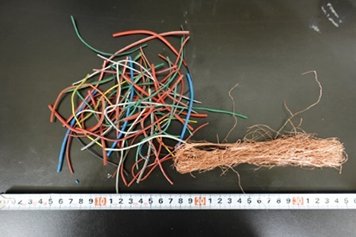
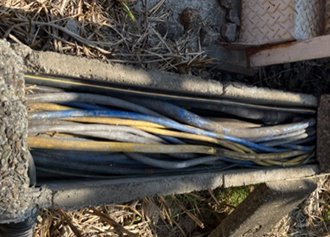
Copper wire and insulation material after separation by the wet stripping processSignal cable installed along a railway trackWire insulation swollen by an organic solvent during the stripping process
Through open innovation initiatives and participation in NEDO development and demonstration projects, we have successfully created new materials using sintering-based metal 3D printing.
Battery-Related Business — Battery Degradation Diagnosis Technology
Launch of Demonstration Testing for Degradation Diagnosis Technology for Automotive Lithium-Ion Batteries *From the Company’s press release dated August 29, 2019
Mitsubishi Materials Corporation (President: Naoki Ono; capital: 119.4 billion yen) is pleased to announce that it has begun demonstration testing, in collaboration with Goiku Battery Co., Ltd. (Representative Director: Akira Tabata; capital: 30 million yen; hereinafter “Goiku Battery”), of degradation diagnosis technology for automotive lithium-ion batteries when they are replaced or disposed of.
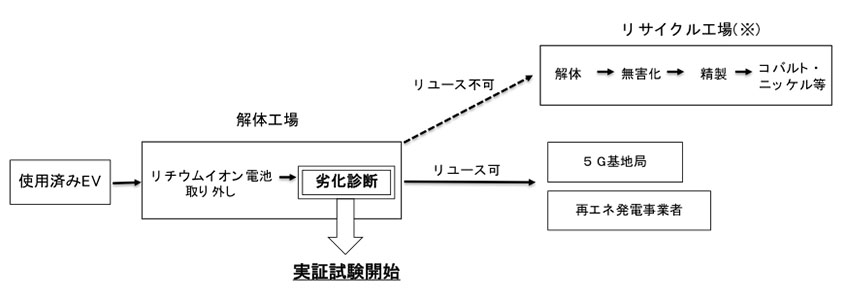
Demand for lithium-ion batteries is expected to continue increasing as automobiles become increasingly electrified, and the volume of spent automotive lithium-ion batteries is also expected to grow accordingly. While the Company is promoting a recycling business for spent lithium-ion batteries, lithium-ion batteries with a low degree of degradation can be reused at low cost as storage batteries for applications such as 5G base stations and renewable energy power generation operators. As a result, demand for battery reuse is also expected to increase significantly going forward.
Accordingly, the Company has begun verifying degradation diagnosis technology for spent automotive lithium-ion batteries in collaboration with Goiku Battery, which possesses innovative battery diagnosis technology capable of measuring the degree of battery degradation accurately in a short period of time. By properly diagnosing the degree of degradation of spent lithium-ion batteries, it becomes possible to sort batteries that can be reused from those that should be recycled, thereby contributing to the effective utilization of batteries and resources. The Company will continue to promote joint development of highly efficient battery diagnosis technology toward commercialization.
Under its long-term management policy, the Mitsubishi Materials Group aims to become “a leading company committed to creating new materials with unique technologies for people, society, and the Earth, and contributing to a recycling-oriented society.” Through its lithium-ion battery reuse and recycling businesses, the Group will continue contributing to the further realization of a recycling-oriented society.
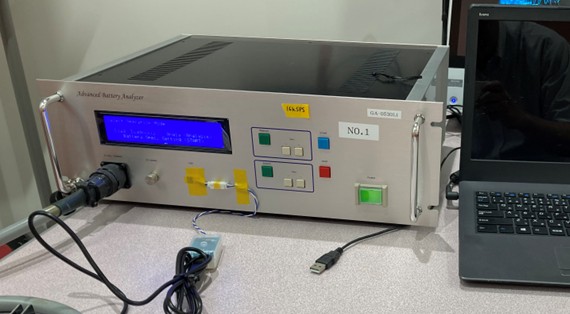
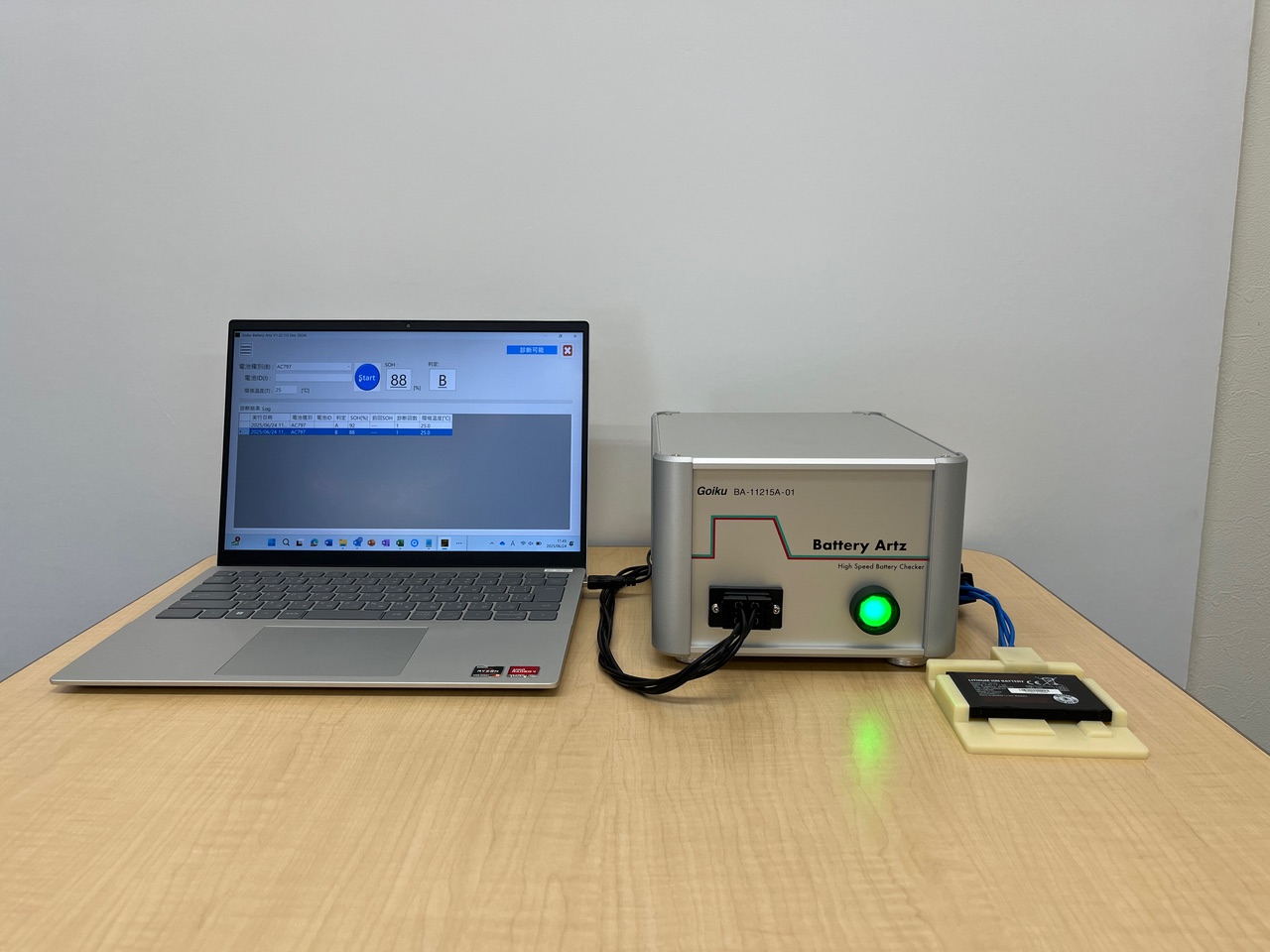
Reuse and Recycling Flow External View of Demonstration Testing Equipment External View of Demonstration Testing Equipment
Carbon Recycling Technology Selected as a NEDO Commissioned R&D Project
—Accelerating the Development and Practical Application of New Technology for CO2 Resource Conversion— *From the Company’s press release dated October 15, 2021
The carbon recycling process that Mitsubishi Materials Corporation has been developing has been selected by the New Energy and Industrial Technology Development Organization (NEDO) as a commissioned project under the “Carbon Recycling and Next-Generation Thermal Power Generation Technology Development / CO2 Emissions Reduction and Effective Utilization Practical Application Technology Development” program, under the theme of “Technology Development for Producing Carbon Materials through the Chemical Decomposition of Carbon Dioxide.”
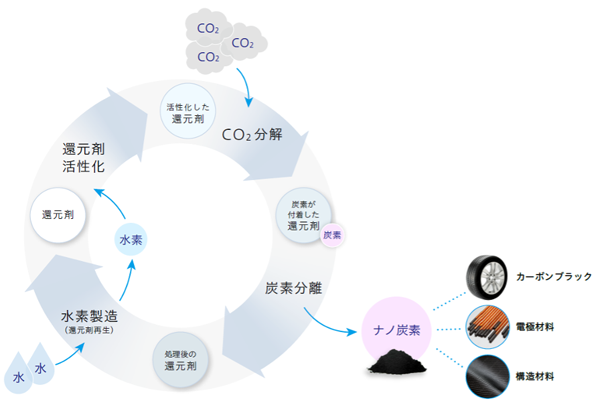
As part of its efforts to create new businesses toward carbon neutrality, the Company began research and development in 2017 on technology for decomposing carbon dioxide (CO2) and recycling it as carbon materials. After conducting a series of tests, the Company succeeded in 2018, at the small-scale testing stage, in decomposing CO2 and recovering fine-particle carbon nanomaterials. In this process, a reducing agent activated through reaction with hydrogen gas (a powdered metal oxide) is used to decompose CO2. The activated reducing agent reacts with CO2 at around 300°C, causing the CO2 to decompose and carbon to adhere to the reducing agent. The reducing agent and carbon are then separated, and the carbon is recovered as fine-particle carbon nanomaterials, which are valuable materials. Carbon nanomaterials are expected to be applied in a wide range of uses, including carbon black for tire reinforcement, battery materials such as electrodes, and structural materials. In addition, the spent reducing agent can be regenerated and reused, and hydrogen can be produced during the regeneration process. This is an innovative process that can simultaneously realize CO2 reuse and hydrogen production.
This commissioned project is scheduled to run for five years, from fiscal 2021 to fiscal 2025. During this period, the Company will develop elemental technologies, optimize the process, expand applications for carbon materials, and examine economic feasibility in order to assess business potential. Afterward, the Company aims to conduct demonstration testing at an expanded scale and achieve practical application around 2030.
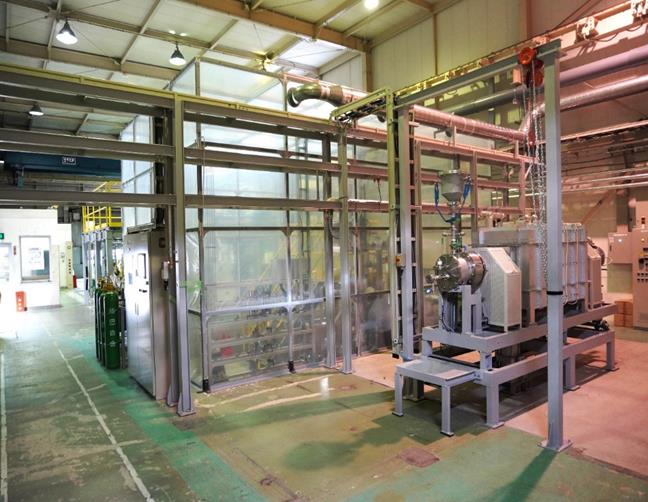
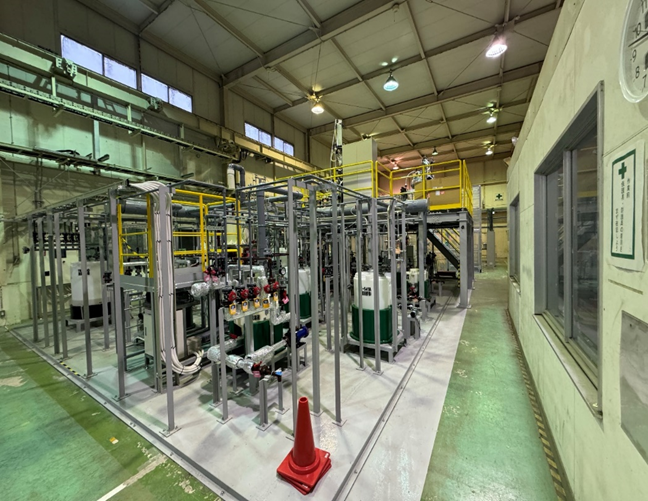
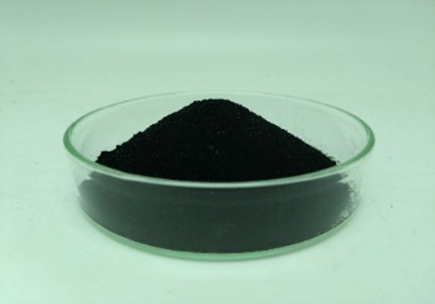
Conceptual Image of the R&D Theme in This Commissioned ProjectReducing Agent Activation and CO2 Decomposition Equipment at the Bench PlantCarbon Separation and Hydrogen Production Equipment at the Bench PlantRecovered Carbon Nanomaterials
A New Energy Management System Integrating Heat and Electricity (Thermoelectric EMS)
Background and Challenges
In many factories, electricity and heat are managed separately, making it difficult to optimize overall energy use. To address this challenge, we carried out an initiative aimed at integrating the management of heat and electricity to achieve both energy cost reduction and energy efficiency improvement.
Approach
Using PoC activities and measured data from our own factories, we examined a new energy management system that combines heat utilization with electricity procurement. In collaboration with partner companies with strengths in data analysis and system development, we also evaluated the technical and business feasibility of practical implementation.
Results
Verified an operational concept for integrated optimization of heat and electricity
Confirmed its effectiveness in reducing energy costs
Identified directions for commercialization through demonstration activities
Summary
To optimize energy use in factories, it is important to view energy not as separate elements but from the perspective of overall optimization. Through this initiative, Mitsubishi Materials combined its expertise in heat utilization and factory operations with the digital technologies of partner companies, identifying new possibilities for energy management. This initiative represented an important step toward future social implementation.
Next-Generation Battery Materials
Successful Development of a New Manufacturing Technology for Materials Used in All-Solid-State Batteries for xEVs *From the Company’s press release dated December 21, 2023
Mitsubishi Materials Corporation has successfully developed a new manufacturing technology with excellent mass-production potential for sulfide-based solid electrolytes, one of the key materials used in all-solid-state batteries for xEVs. The Company will continue improving the process and enhancing quality toward future commercialization.
Sulfide-based solid electrolytes offer high ionic conductivity among solid electrolytes for all-solid-state batteries. Because of their high input and output performance, they are expected to help extend the driving range of vehicles and shorten charging time, and are regarded as promising materials for all-solid-state batteries for xEVs. However, low mass productivity and difficulty in handling have been major obstacles to their practical application in all-solid-state batteries.
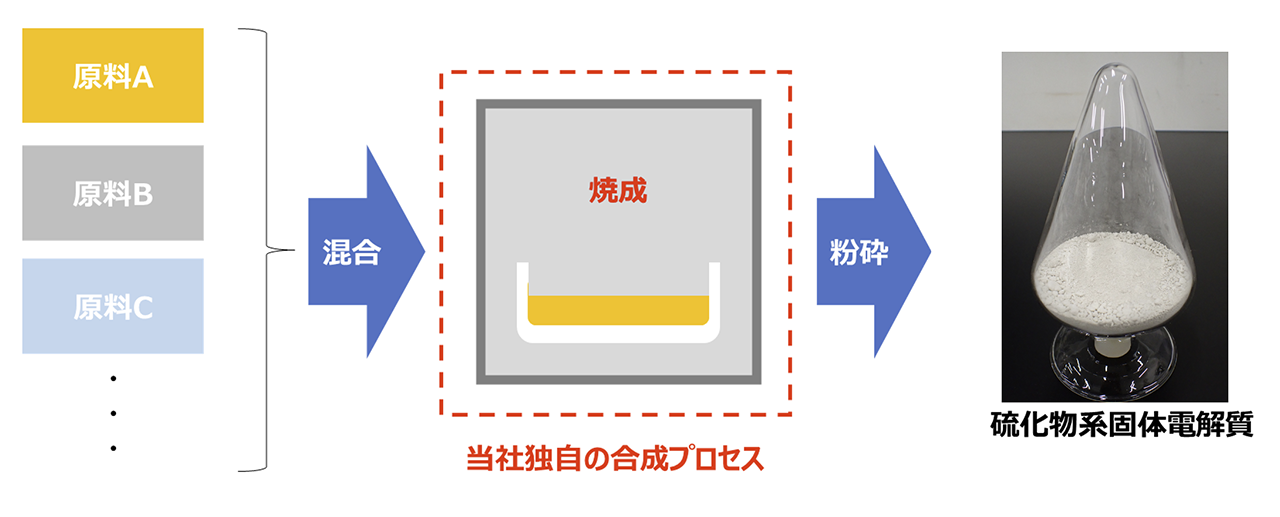
Leveraging its technological development capabilities and expertise in a wide range of nonferrous metal materials, the Company has successfully developed a simple new manufacturing process for sulfide-based solid electrolytes. This process makes it possible to synthesize the target material simply by mixing sulfur-containing raw materials and firing them in a heating furnace. The new process is expected to facilitate scale-up of production, and the Company will continue studying commercialization of sulfide-based solid electrolytes. Currently, sulfide-based solid electrolytes synthesized using this process are being provided as samples to selected customers for evaluation toward commercialization.
The Mitsubishi Materials Group has defined its vision as “designing circulation for people, society, and the Earth, and realizing a sustainable society.” The Group will continue contributing to the creation of an affluent society by providing nonferrous metal materials and high-value-added products.
Exploring a New Testing Solution for Simpler and Faster Food Allergen Detection
Background and Challenges
With growing awareness of food allergies, voluntary allergen testing is becoming increasingly important at food manufacturing sites. At the same time, conventional testing methods face challenges in terms of cost, ease of use, and testing time, creating a need for simpler and faster testing solutions.
Approach
Mitsubishi Materials worked on developing an allergen testing solution that enables anyone to perform highly accurate testing easily by utilizing its electrochemical DNA sensor technology, comb-shaped electrode technology, and nucleic acid amplification and purification technologies. Through co-creation with companies that have expertise in test kits and compact device development, we also conducted technical verification toward practical implementation.
Results
Verified the feasibility of allergen testing using electrochemical DNA detection technology
Identified technical issues for simplifying and accelerating the testing process
Clarified the development approach and direction for commercialization
Summary
The need for food allergen testing is increasing year by year. In this initiative, Mitsubishi Materials combined its bio- and nucleic acid detection technologies with the expertise of partner companies to explore the potential of a new testing solution. Through demonstration activities, we identified a direction for technology development that can help address challenges faced at food manufacturing sites.
Plant-Based Power Generation
Using trace amounts of electricity generated from the growing environment of plants
#Visualization of Nature #Plant-Based Power Generation #Connection with Nature
Monitoring Equipment That Visualizes Our Connection with Nature
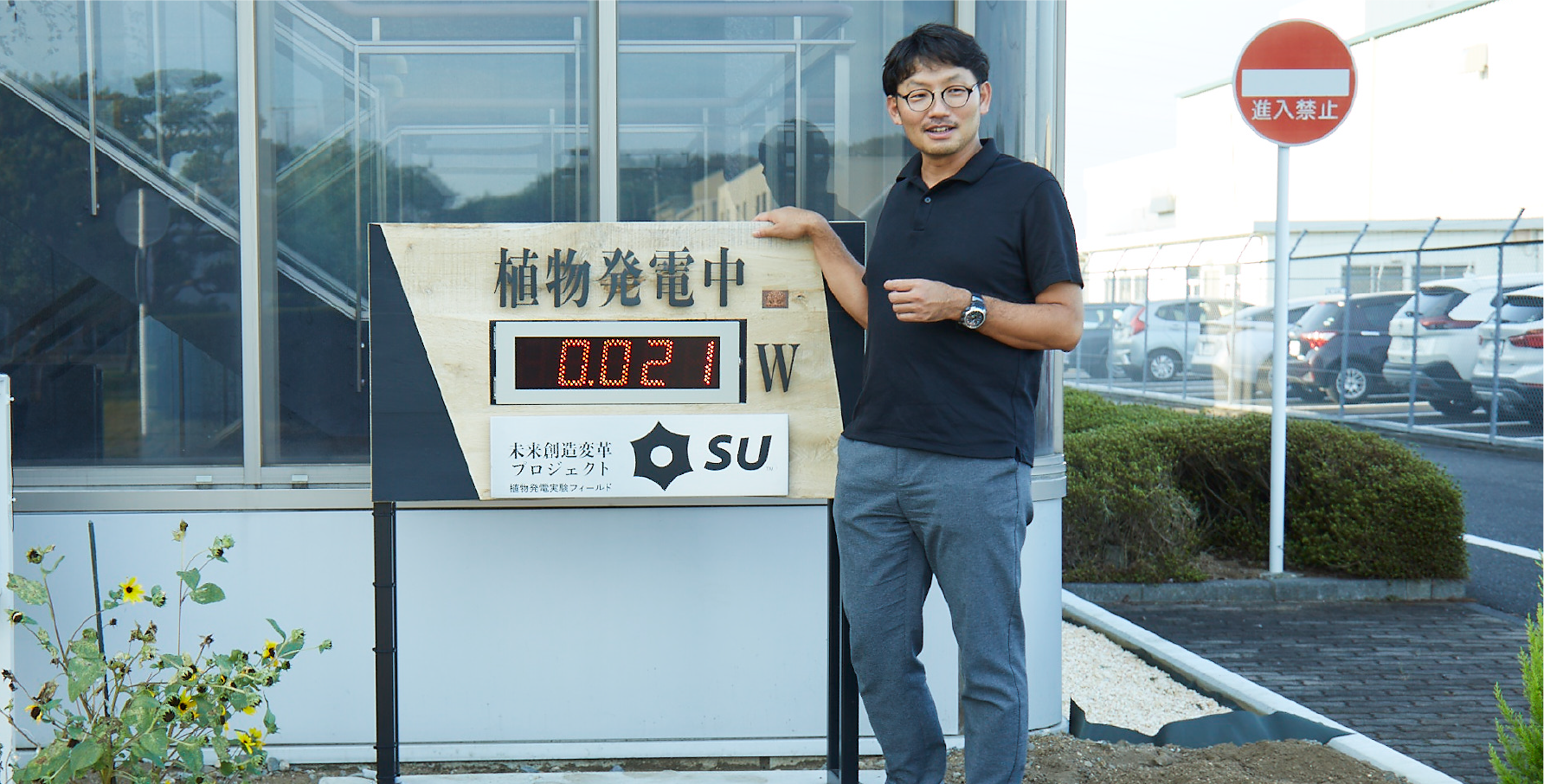
The Innovation Center generated the idea and built a system that can visualize the amount of electricity generated. The signboard equipped with a display showing the power generation amount uses mizunara oak wood from Teine Forest, part of the company-owned “Materials Forest.” Its design makes use of the natural qualities of the material, allowing viewers to see and feel a connection with nature. At present, only a very small amount of electricity can be generated, but we are experimenting with different conditions and gradually working to improve performance. We hope this initiative will attract the interest of many people, inspire a variety of ideas, and lead to further progress toward realization and new ways of thinking. It also reflects our wish that connections with nature and connections among people will continue to grow.
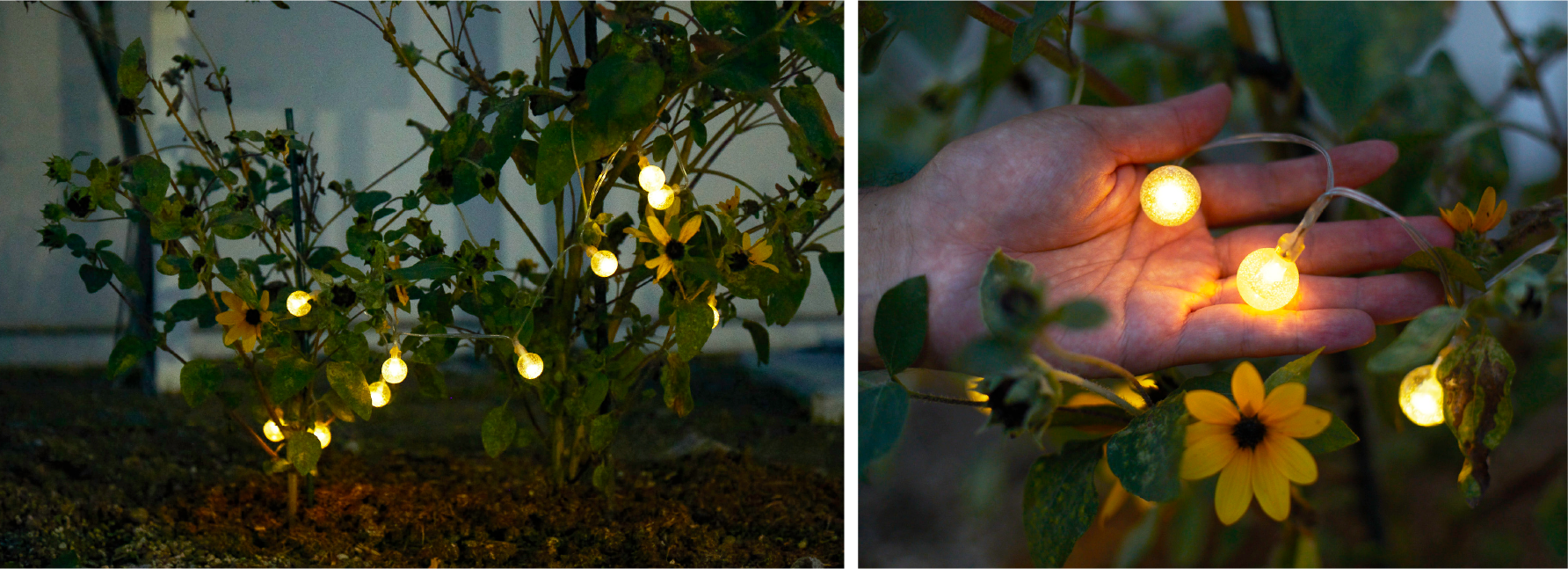
With no external power source or conventional power generation system, electricity is generated spontaneously using only charcoal, magnesium, and plants. The ultimate goal is to create a loop in which plants grow through photosynthesis powered by the light generated from their own electricity.
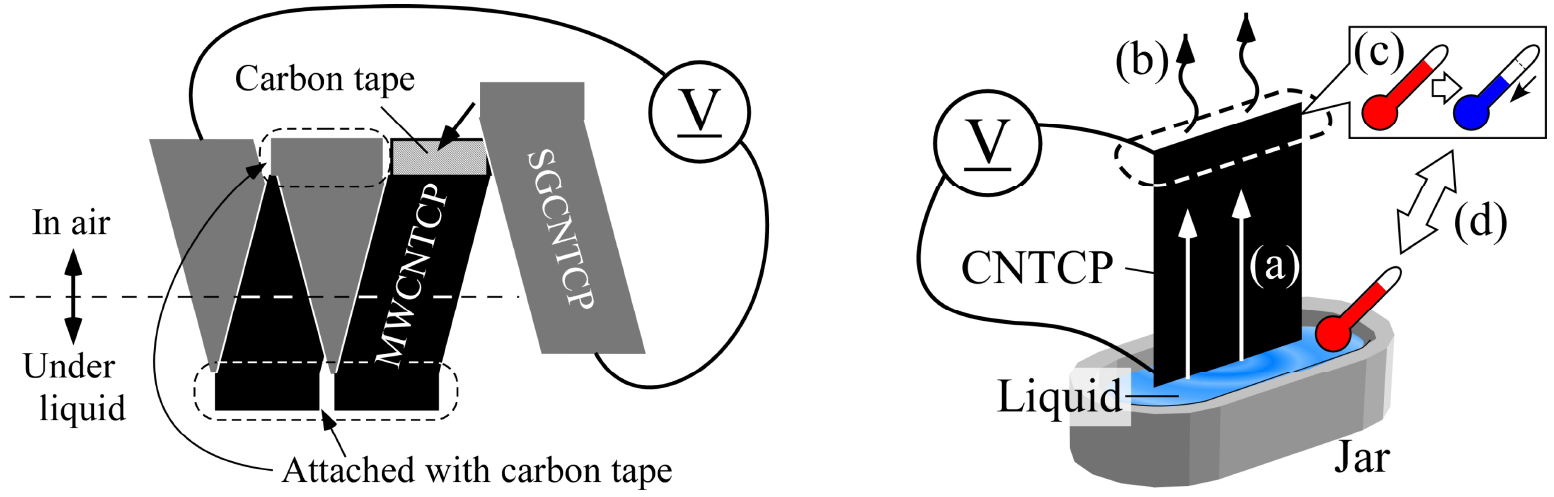
Converting voltage differences caused by temperature differences into electricity
#Evaporative Heat #Paper #Water #Carbon Nanotubes
An Ultimate Environmentally Friendly Power Generation System Using Evaporative Heat
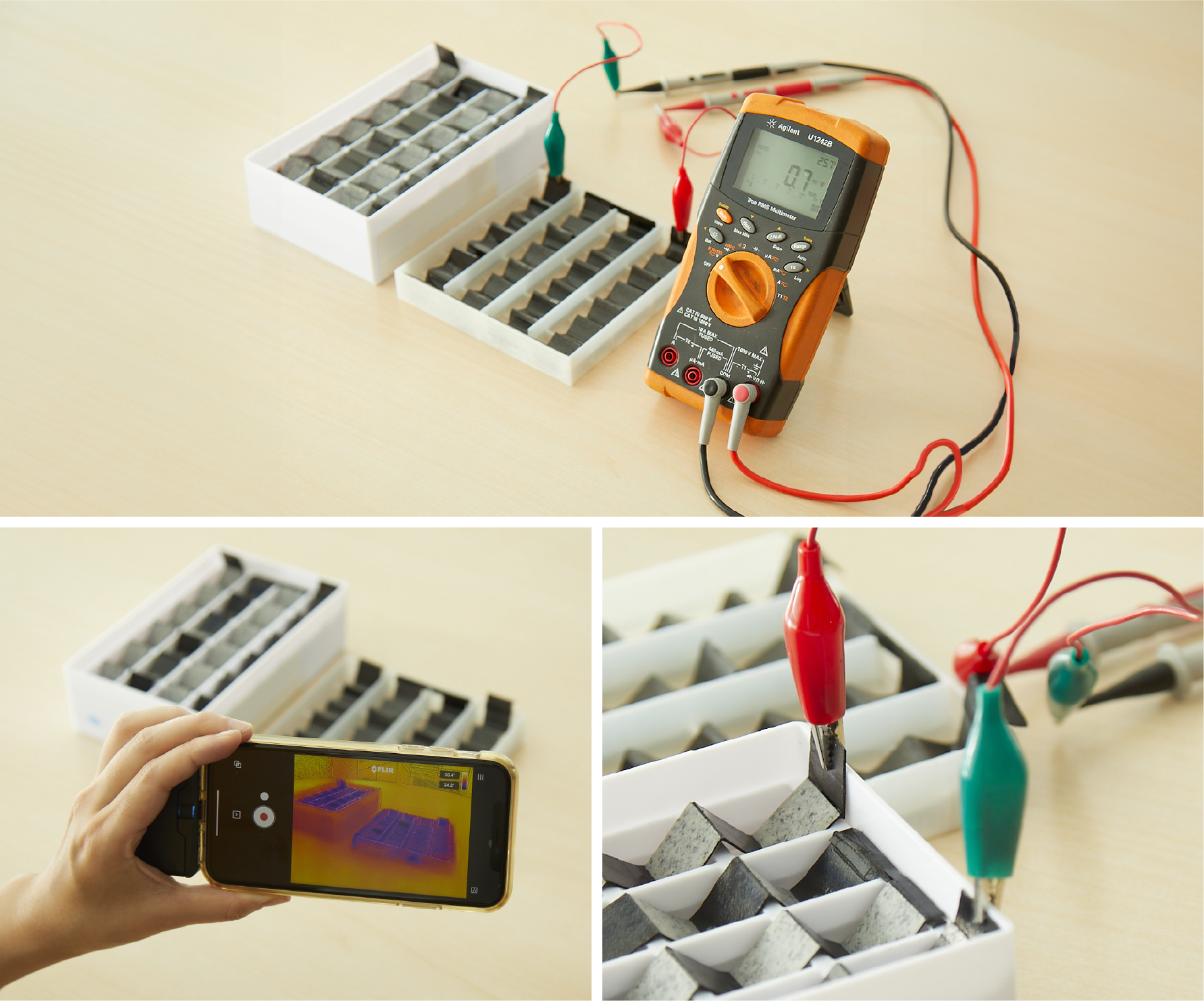
This power generation module takes advantage of the capillary action of paper fibers and the ease of processing paper. It generates electricity through the conductivity of carbon nanotubes and temperature changes caused by evaporative heat. By overturning the conventional assumption that paper should not be wetted, the module successfully generates electricity when exposed to water. It enables energy to be obtained from the familiar phenomenon of water drying. The technology can also be expanded to sensors that make use of the characteristics of carbon nanotubes and composite fibers.
Power Generation Mechanism
The mechanism generates electricity by wetting paper made of carbon nanotubes with water and using the temperature change caused by evaporative heat as the absorbed water evaporates through capillary action. This simple method, with minimal environmental impact, makes it possible to obtain a reliable source of energy.
Resin Medium Mixed with Pigments Derived from Fallen Leaves
#Unused Biomass #3D Printer #Fallen Leaves #Earth Colors
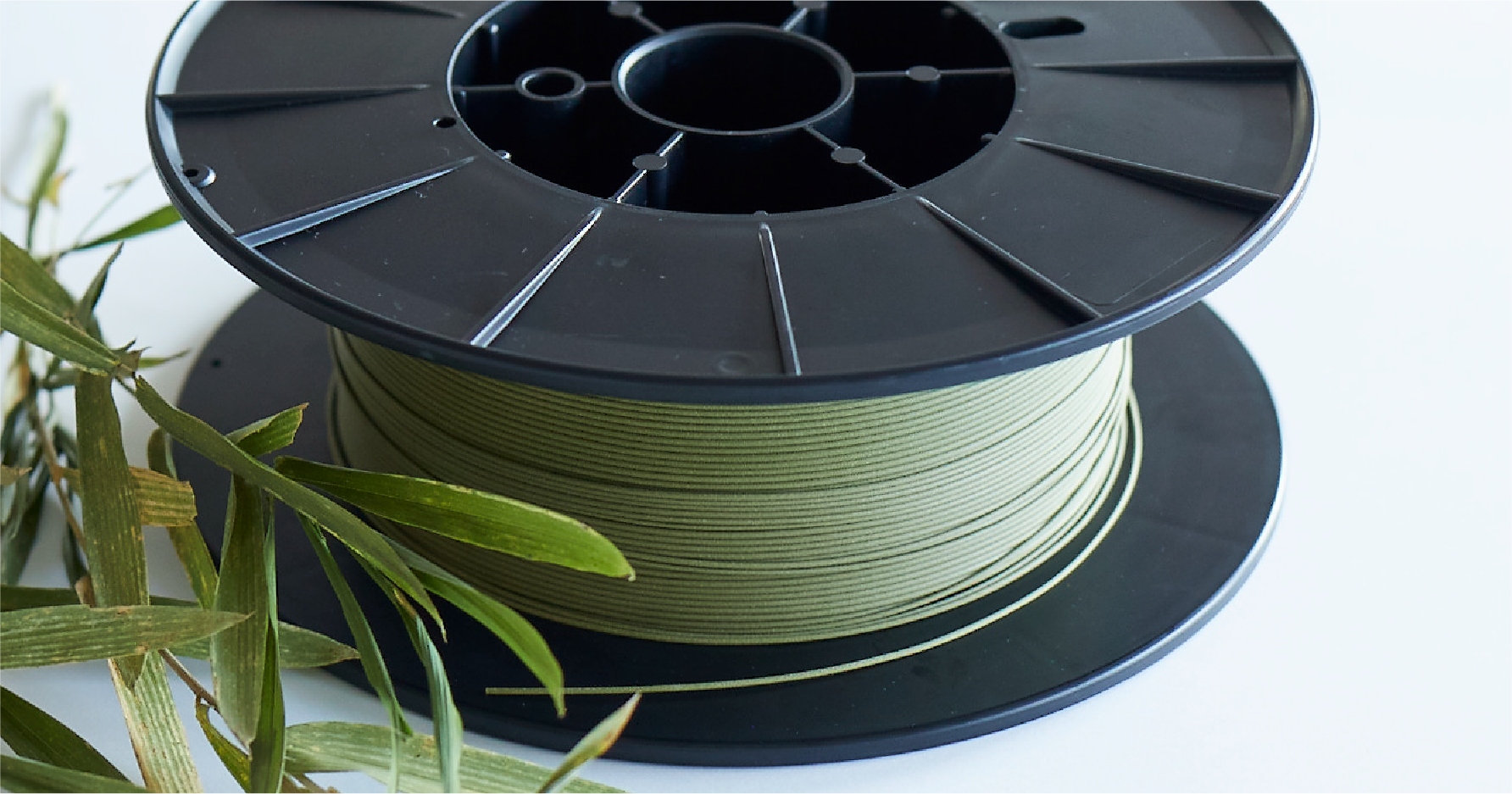
MophBlu is a concept for utilizing unused biomass such as weeds and fallen leaves. The fresh green leaves of summer and the autumn foliage are beautiful and pleasing to the eye, but once the season passes, they either wither naturally or are cut, collected as fallen leaves, and discarded. This idea aims to make use of such unused biomass as vivid, earth-colored plant-based pigments by properly drying and powdering it before it withers and loses its color.
The initiative originally began as an idea to make effective use of bamboo grass in order to address damage to tree growth caused by the overgrowth of bamboo grass in company-owned forests in Hokkaido. The concept was later also explored using familiar fallen leaves such as maple and ginkgo leaves. To preserve the color of the pigments that were produced, attention was focused on biodegradable resin that flows at relatively low temperatures. By mixing the pigments with this resin, prototypes were created as 3D printer filament and as resin molded products by pouring the material into molds.
Leaves found on city streets were used as pigments and mixed into resin, then molded in the form of crayons to evoke the image of color. Even for the same maple or ginkgo species, differences in where and when the leaves fell directly affected the resulting crayon colors.
Bamboo grass powder from Hokkaido was mixed into the material to create filament. The scent of bamboo grass remained strongly.
A new type of dental checkup that digitally captures the inside of the mouth using a three-dimensional digital scanner
Summary
Mitsubishi Materials established Dental Door Corporation as a new business company, with a 100% ownership stake, and provides “Smart Dental Checkup™,” a cloud-based dental checkup service for health insurance operators. The service digitizes the inside of examinees’ mouths for group dental checkups conducted at workplaces and similar settings.
The main target of the business is group dental checkups conducted at workplaces and similar settings.
This represents the Company’s first full-scale initiative in the healthcare field.
By helping increase the rate of participation in dental checkups and visits to dental clinics, the initiative contributes to the realization of a more prosperous society.
Snowmelt Sensors and IoT Devices for Disaster Prevention Technology in Cold Regions
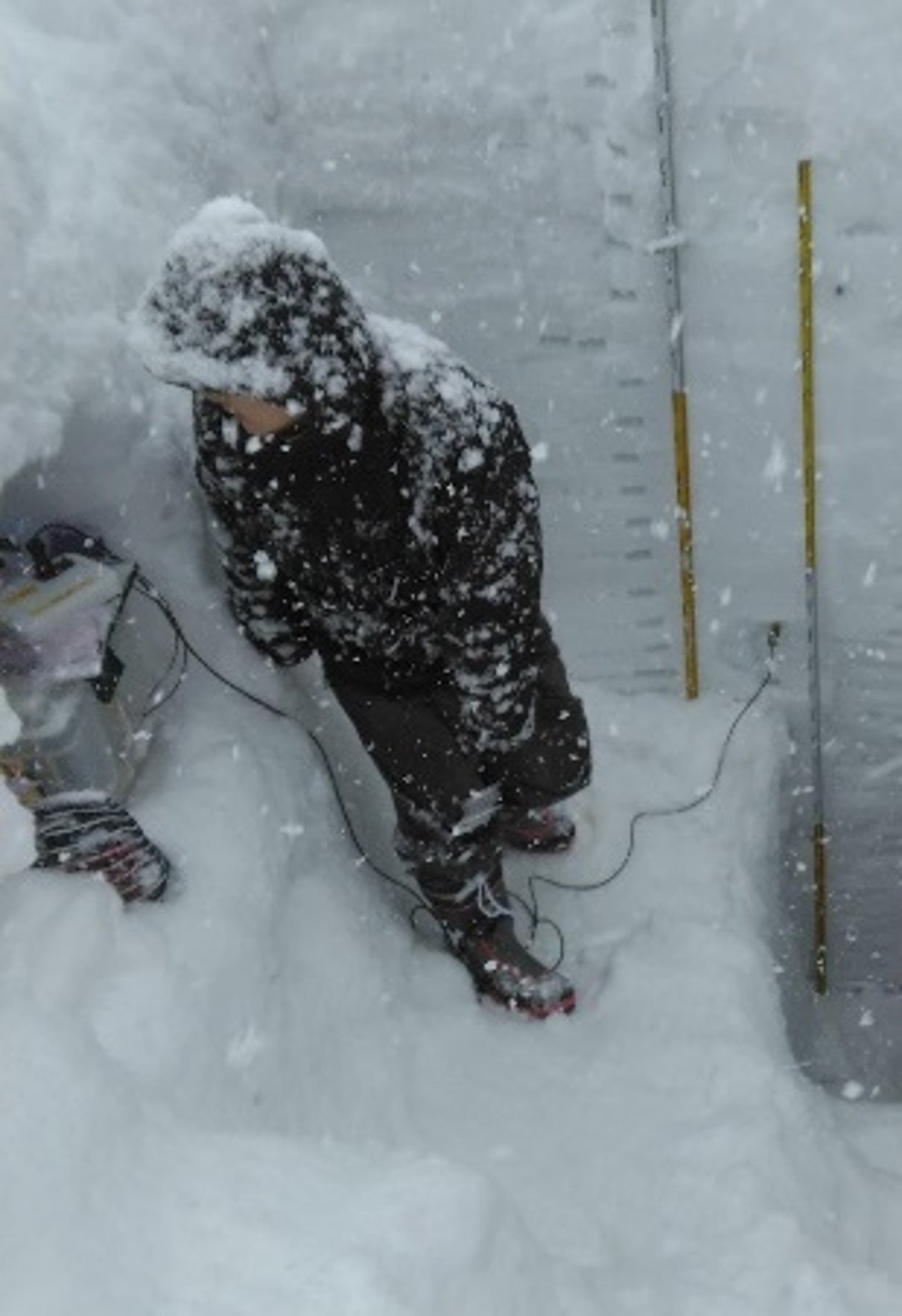
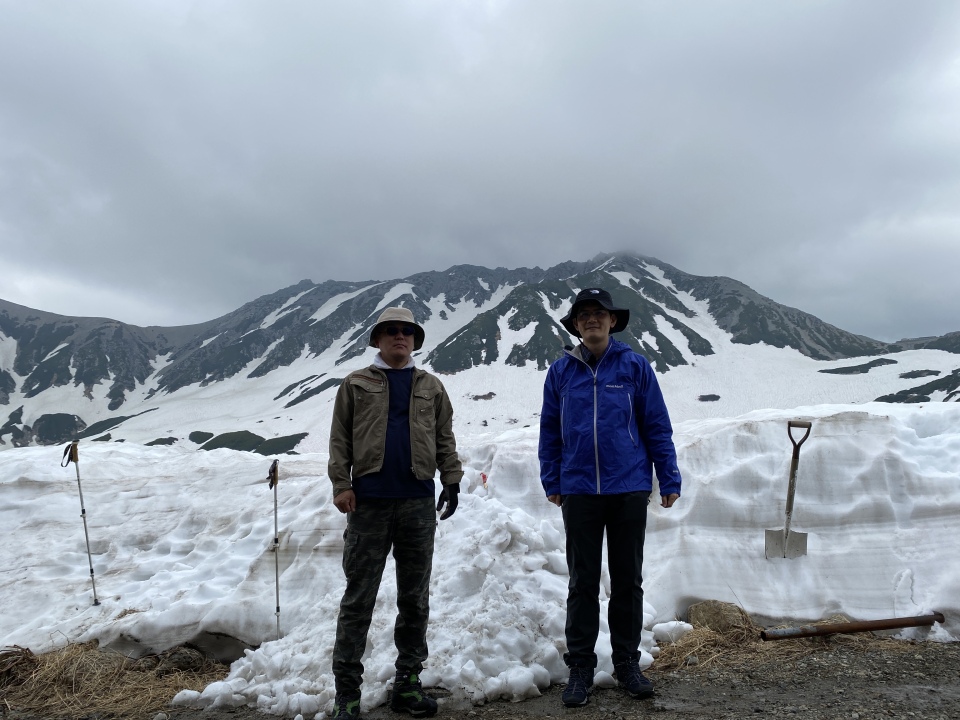
Approximately half of Japan’s land area is classified as a heavy snowfall region, and many types of snow-related damage occur there. In response, we have developed a sensor capable of detecting the degree of snowmelt (patent pending).
This sensor can determine a wide range of snow conditions, including frozen, slushy, and melted states.
The values obtained from this sensor also showed a strong correlation with the ratio of ice to water in snow.
Based on this principle, we developed an easy-to-use handheld tester-type measurement device (patent pending).
By applying this principle to IoT technology, we are developing a service that enables snow conditions to be monitored and recorded remotely. We are working toward commercialization both as a disaster prevention technology that protects lives and property and as a technology for making effective use of snow.
The time is approaching when we will be able to check snow conditions in remote locations from wherever we are.
Cross-Section ObservationView from the Top of an Abandoned Ski ResortVerification Testing in Snowy MountainsClimbing at an Abandoned Ski Resort
Biosensors
Mitsubishi Materials has developed thin-film interdigitated electrodes primarily for electrochemical measurement applications used in biosensors.
Flexible Copper Alloy
Development of "Flexible Copper Alloy,"
a Pliable Metal That Returns to Its Original Shape After Bending * From our press release dated September 17, 2026
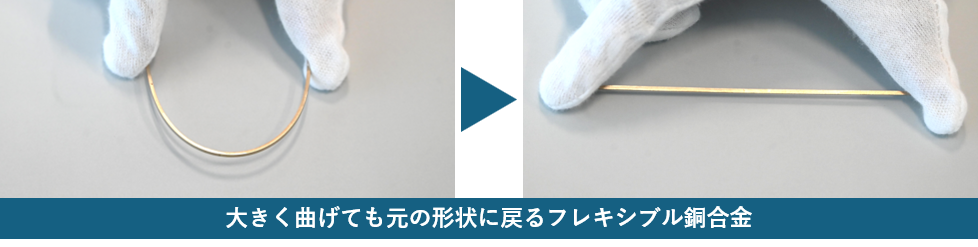
Mitsubishi Materials Corporation has developed a "Flexible Copper Alloy" that combines high electrical conductivity with the ability to deform under a small force and return to its original shape once the force is removed.
As a metal that unites pliability—returning to its original shape even after bending—with conductivity, this copper alloy enables highly flexible design that was difficult with conventional metallic materials, and is expected to create new applications. Samples are now available from our Innovation Center.
Features of the Flexible Copper Alloy
Ordinary copper materials do not return to their original shape after large deformation; they retain the deformed shape. In contrast, this copper alloy can be greatly deformed with only a small force and, even after large deformation, returns to its original shape once the force is removed. It also offers high electrical conductivity comparable to brass and aluminum alloys, combining three features: ease of bending, shape recovery, and conductivity.
These features are expected to open up new applications, such as wiring materials for moving parts subject to repeated bending—robot joints and wearable devices—as well as components for electronic devices.
Furniture inspired by the Kelvin 14-sided polyhedron
#Kelvin 14-sided polyhedron #Skin cells #Metabolism #Production and disposal
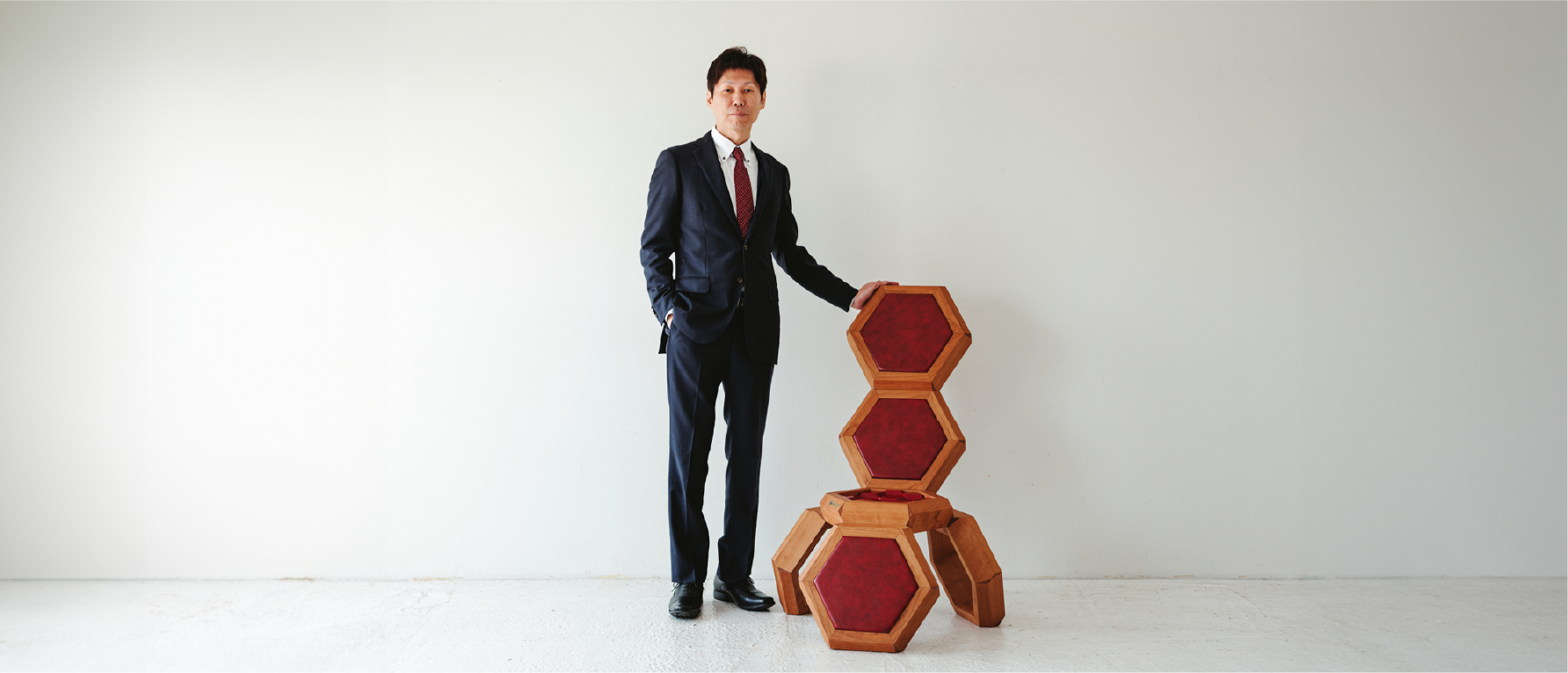
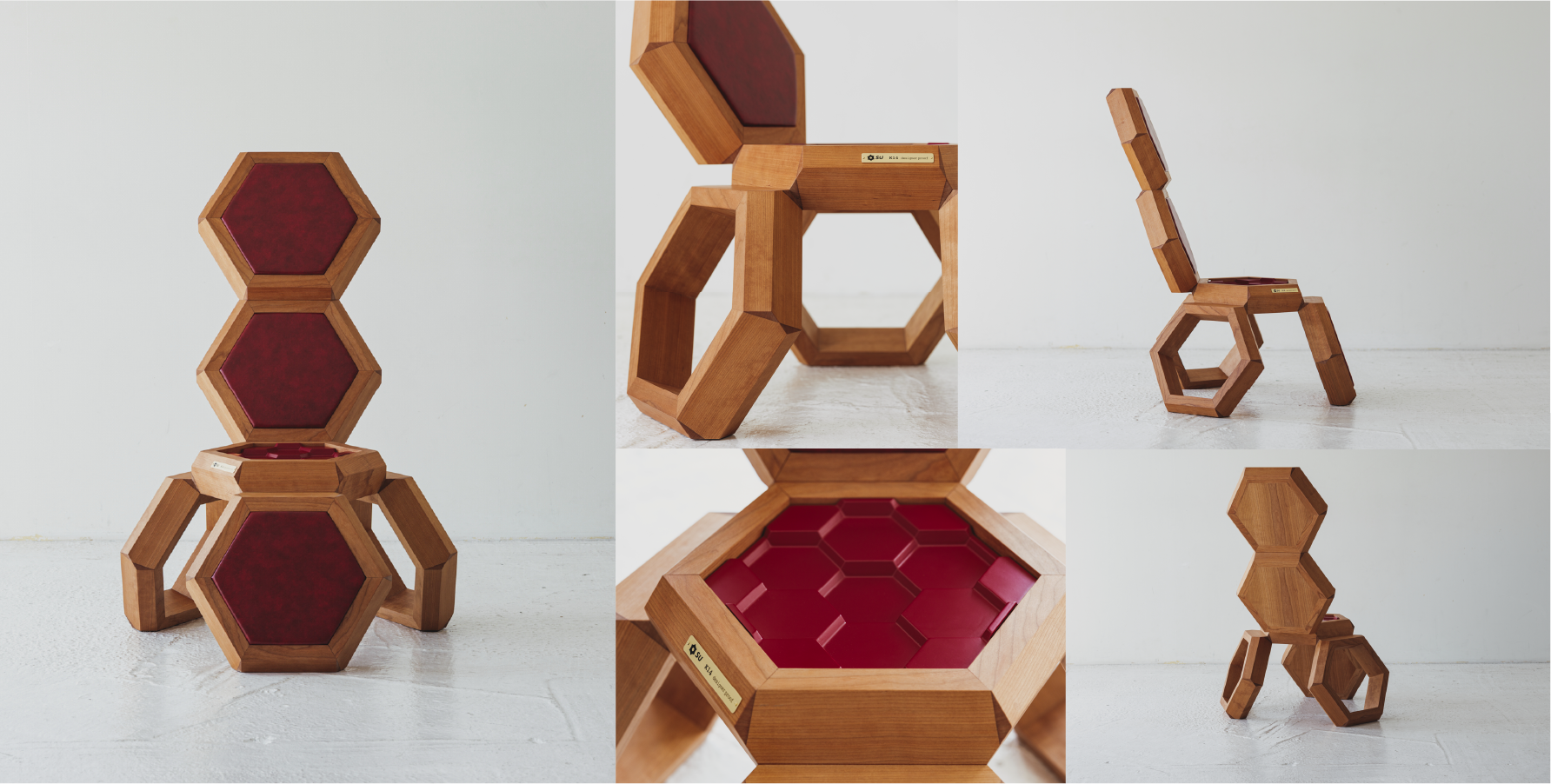
Skin cells maintain their barrier function against various forms of external stimulation while continuously renewing themselves through the replacement of old cells with new ones. The polyhedral shape of skin cells—specifically, a flattened Kelvin 14-sided polyhedron—may be well suited to responding to the many types of input they receive. In the microscopic metabolism that takes place repeatedly beneath our awareness, maintaining a balance between the production and disposal of cells is essential. In natural processes, large imbalances are often undesirable. When we consider metabolism on a macroscopic scale, ideas such as material circulation and recycling on Earth may come to mind. Since the Industrial Revolution, humanity has advanced values and behaviors centered on mass production, mass consumption, and mass disposal in the name of economic rationality, ultimately disturbing the balance of the natural world. Perhaps no one other than those of us living in the 21st century has the potential to metabolize these old values and behaviors and build a new society.
In this work, we focused on skin cells as a familiar symbol of metabolism and created a chair inspired by their shape: the Kelvin 14-sided polyhedron. We hope that by experiencing this work, viewers will enjoy the elegant design found in nature and become more conscious of the direction in which we should act.
The chair was designed and fabricated using only congruent flattened Kelvin 14-sided polyhedra. The seat section is intended to evoke skin cells, where the Kelvin 14-sided polyhedron can be felt as something familiar, and three layers of urethane Kelvin 14-sided polyhedra are embedded within it. SH: 400. The chair was designed to withstand practical use.
Envisioning rollable architecture and architecture made by weaving
#Reconstruction #Reconstruction #Knitting #Roll #Origami #Regeneration
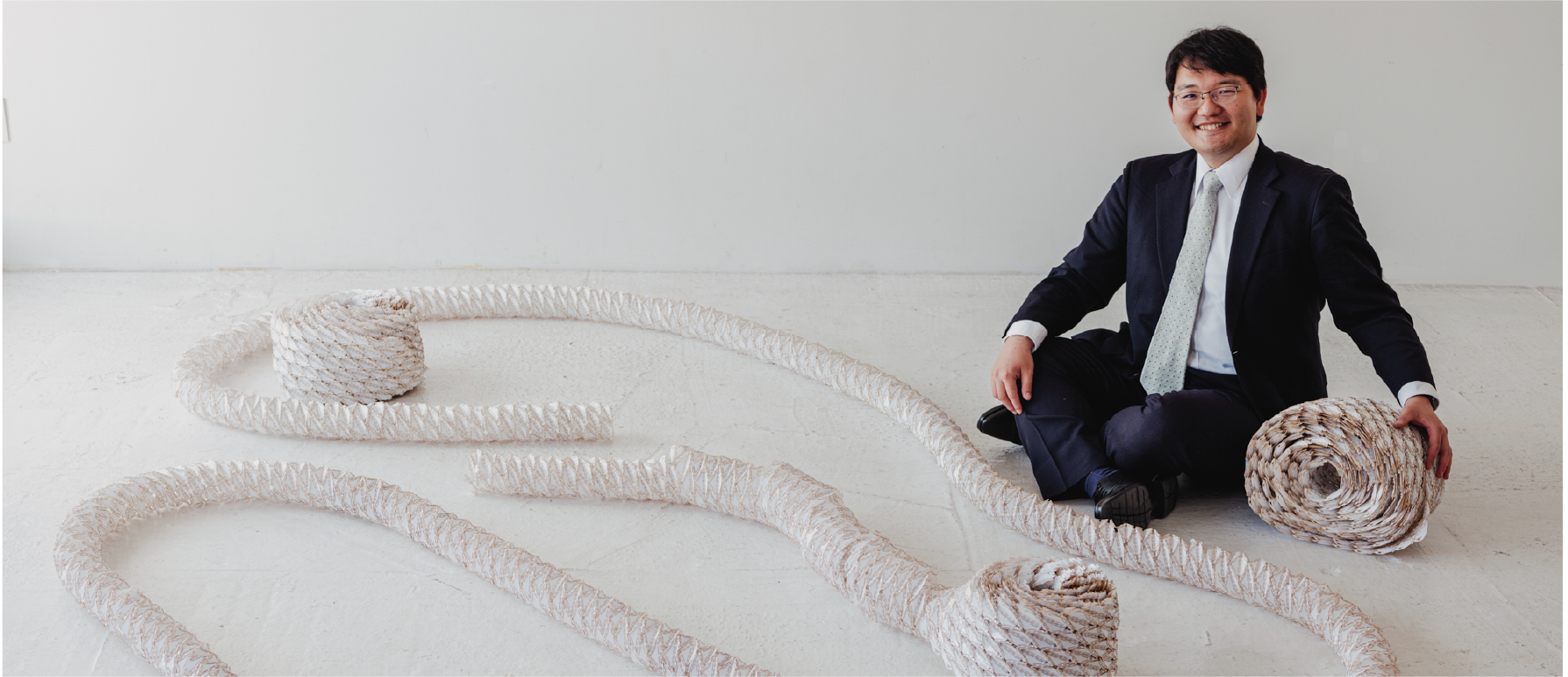
WVAM is a concept model that represents Reconstruction as an advanced concept beyond Reuse, Reduce, and Recycle.
Reuse, such as reusing empty bottles, can only regenerate an item in the same form. Recycling, such as recycling empty cans, requires a large amount of energy in the form of heat. WVAM, on the other hand, can be unraveled after being woven into one shape and then woven again into a different shape, allowing it to be regenerated into an entirely new form. Moreover, almost no energy is consumed when it is unraveled. Materials that can serve as the basis for various structures while requiring almost no energy for reuse may be needed in the next era.
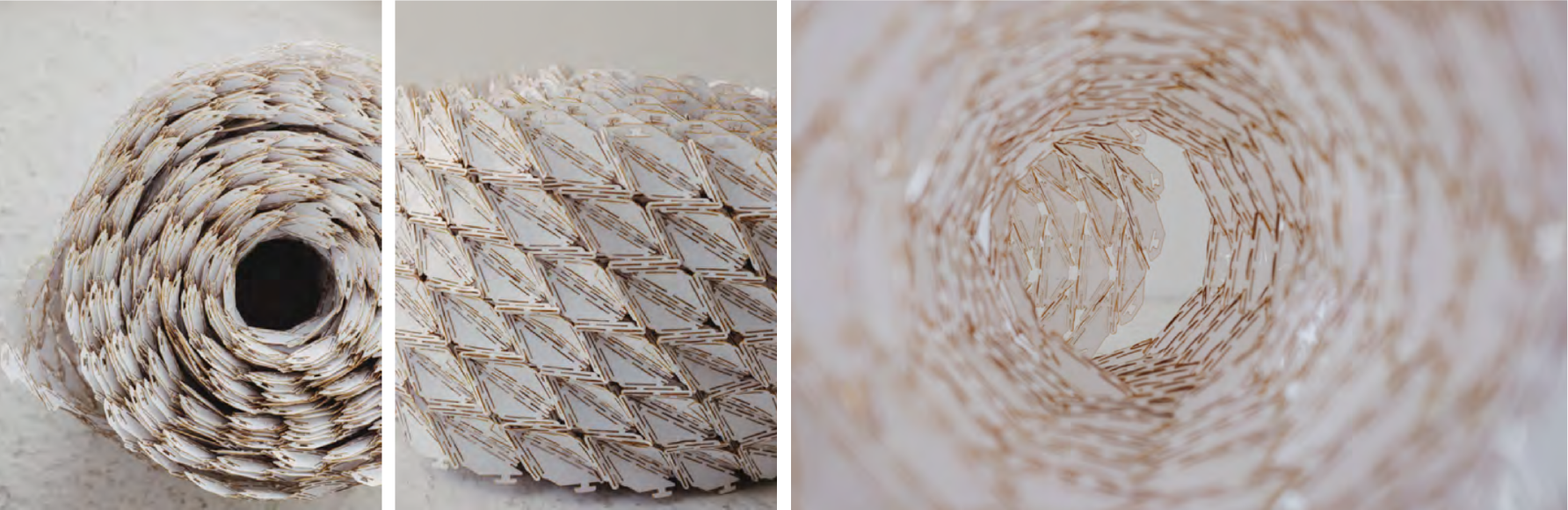
WVAM consists of a calculated slit structure known as a Living Hinge and folding methods based on Origami. By optimizing the Living Hinge structure and folding methods, it can be applied not only to resin but also to metals and various other materials. WVAM, with this special structure, can transform from a compact rolled state into a long string-like form and then return to its original state. By weaving it in its string-like form, it can be used to create structures such as houses. These structures can then be unraveled back into strings and further returned to rolls, making it possible to build a house when and where it is needed and store it compactly when it is not. In other words, Reconstruction is a material concept that can freely move between the states of Roll, String, and Structure.
When the end of the roll is pulled out, it spontaneously transforms into a hollow tubular string. The string can be woven into various shapes and then unraveled, returning from a string back to its original rolled form. Its flexibility is achieved not through the material itself, but through structural mechanics. This makes it soft enough to be woven while still retaining the potential to function as a structure without the hollow section collapsing when woven. The concept was developed with the aim of enabling architecture in the future. In disaster situations where supplies are scarce and transportation is difficult, rollable architecture could be uniquely effective. The material itself becomes the building resource, and that resource is both rollable and portable. In addition, its method of construction—“weaving”—is extremely simple.
Metal surfaces engraved with microstructures that produce structural color
#Structural Color #Metal #Biomimicry #Biomimetics #Biomimicry
We became interested in the diverse capabilities found in animals and plants and began exploring approaches to imitate their structures.
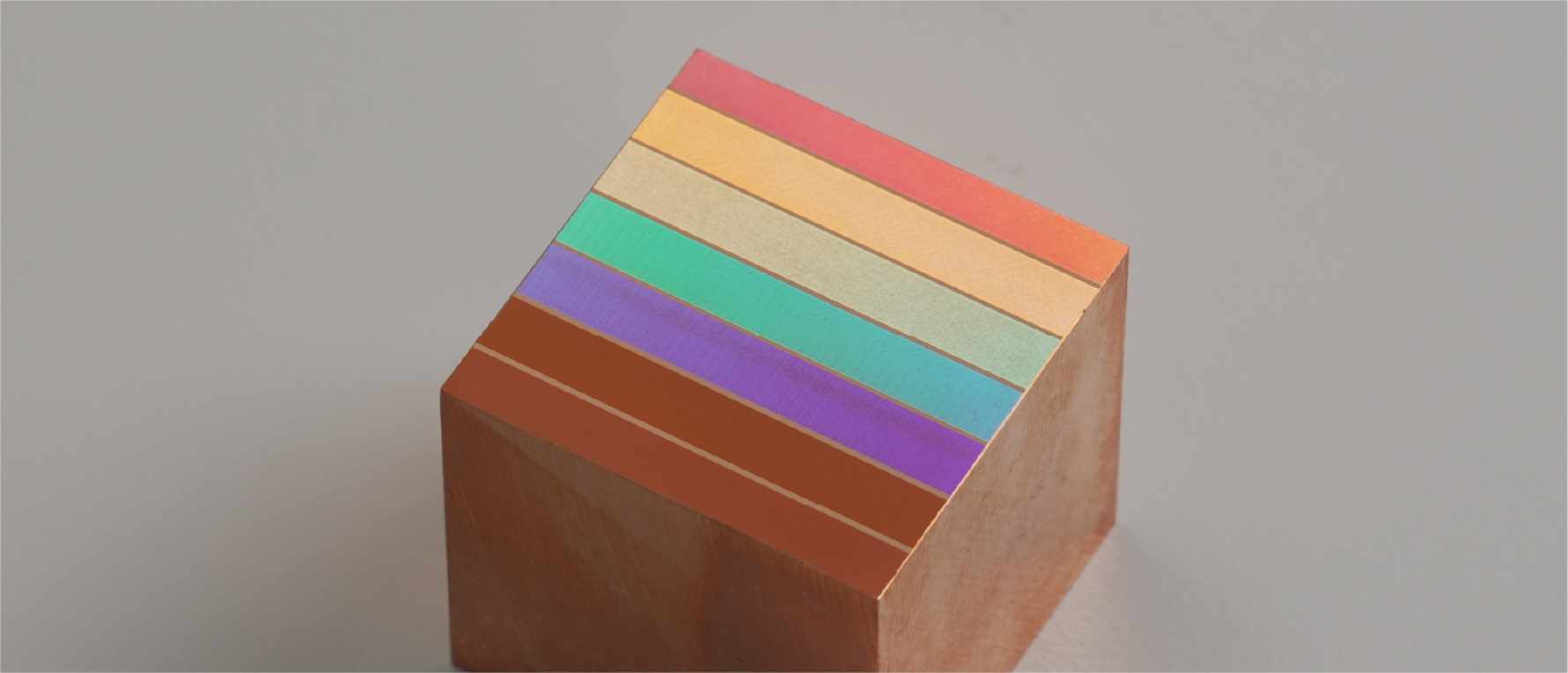
At the same time, all objects have a “surface.” We considered the possibility that by adding multiple biomimetic structures to those surfaces, we could create new opportunities for materials that were once widely used or whose applications are currently limited. In parallel, we also explored microfabrication technologies for surfaces. While testing the expression of functions through microfabrication, we encountered structural colors that appeared as the size of the processed surface features approached the wavelength of light. This reminded us once again that color is perceived when light reflected by an object enters the eye.
We chose metals as the target material because their names themselves often evoke colors, and selected a method that controls light diffraction from among the many ways structural colors can be produced. We hope viewers will enjoy the various colors, including metallic luster, generated by surface structures on copper with features on the order of several hundred nanometers.
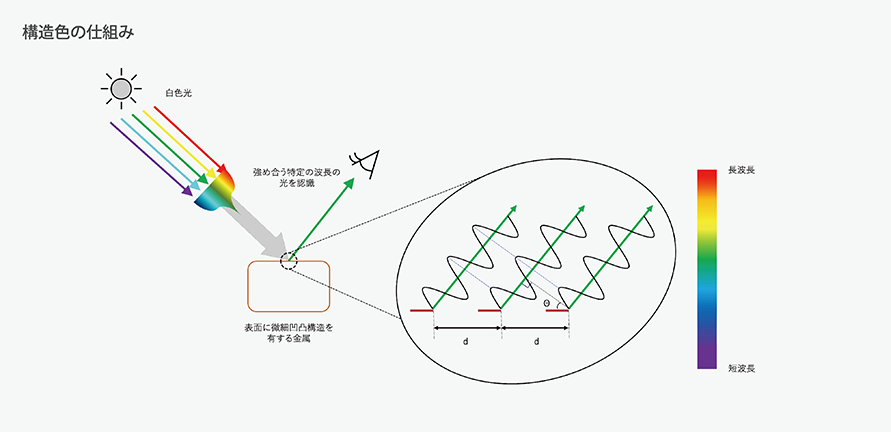
Structural colors are produced by microstructures engraved on the copper surface at the scale of several hundred nanometers. The color that appears is determined by the spacing of the surface structures. Combined with metallic luster, the structural colors appear even more beautiful.
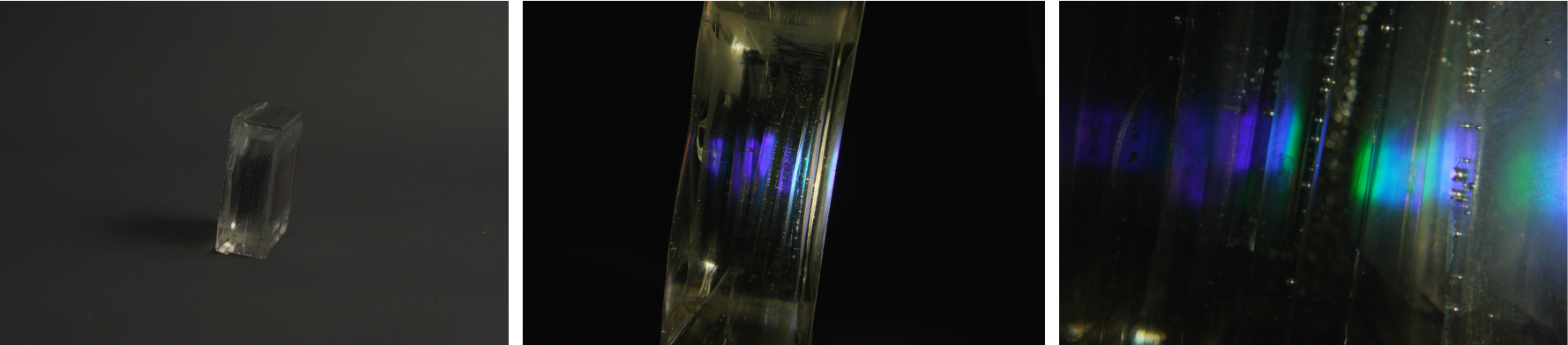
Metal foils, only tens of nanometers thick so that light can pass through, were engraved with structures that produce structural color and laminated inside resin.
As a beam of light passes through each metal foil embedded in the resin, it diffracts, and each of the multiple metal layers emits its own structural color. The result is a product that highlights the beauty of structural color.When a surface has a periodic microstructure with spacing d, the optical path difference between adjacent features is “d × sinθ.” When this optical path difference becomes an integer multiple of the wavelength, the light is reinforced. If the spacing d of the surface structure can be made comparable to the wavelength of light, the wavelength of the reinforced light can be controlled by the spacing d, allowing colors corresponding to those wavelengths to be perceived.
Applying High-Definition Metal 3D Technology to Art
#3D printer #Metal #Sintering #Visual effects
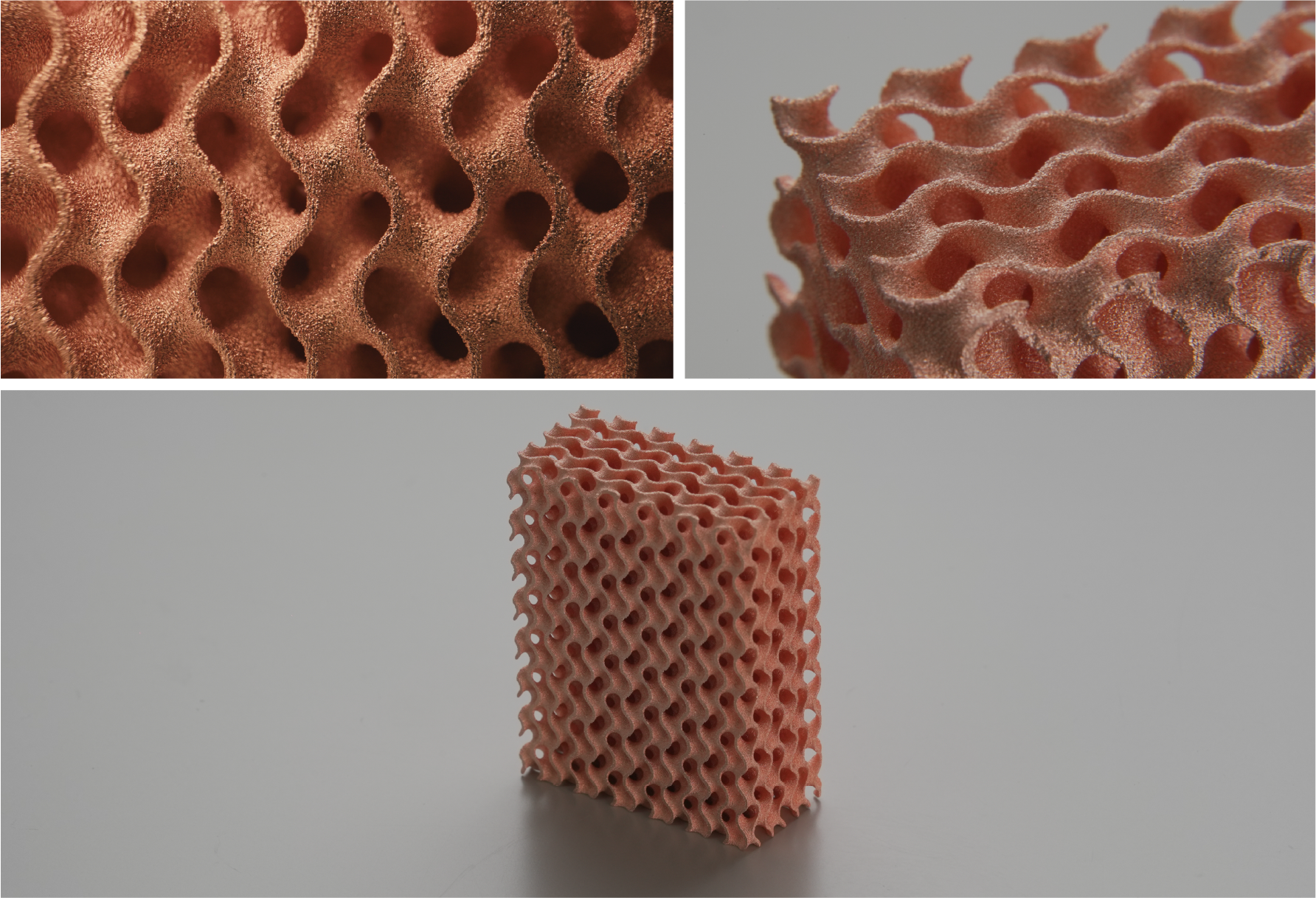
A binder jetting metal 3D printer enables extremely dense and precise fabrication. Going forward, I would like to create metal objects inspired by mathematical models, nature, and scientific perspectives.
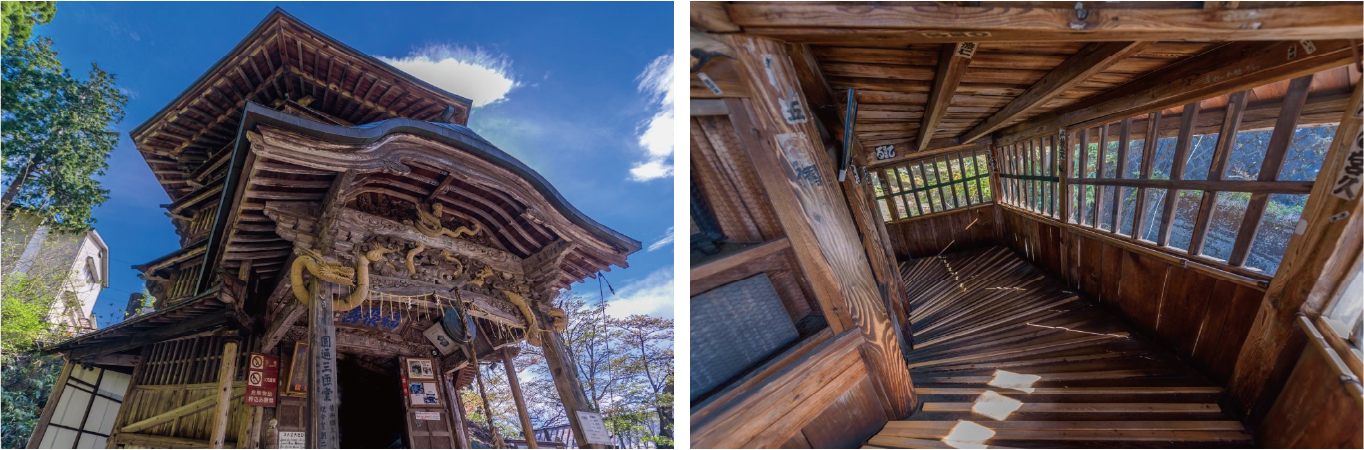
A three-dimensional form in which double helices continue in a fractal pattern. The level of detail has been slightly reduced so that it can be appreciated with the naked eye. At the highest precision, the double-helix structure can no longer be perceived by the naked eye.One well-known architectural example featuring a double-helix structure is Aizu Sazaedo, a 16.5-meter-high, three-story hexagonal temple built on Mt. Iimori in Aizuwakamatsu City, Fukushima Prefecture, in 1796.
Its official name is Entsu Sansodo.
Seeking partners who can propose new business themes
We are seeking partners who can propose new business themes, particularly in “Circular Economy and GHG Reduction.” Even if your theme does not directly fit this area, we encourage you to apply if you believe it can ultimately contribute to these goals.
For more details on the application areas, please see “Wild Wind 2026” under “Areas of Interest.”
At the networking session, members involved in Wild Wind 2026 will be available to hear your proposed themes. It is an opportunity to speak directly with the program team before applying. We also welcome your participation in the program briefing and networking session.
MMC may cover part of the PoC costs, with support of up to several million yen available for each theme.
Over a four- to six-month verification period, MMC’s business development team will work with selected partners to explore commercialization.
Provision of Research and Development Funding
For projects expected to advance beyond Demo Day, investment may be considered by the R&D Strategy Department or the MMC Innovation Investment Limited Partnership (CVC).
Provision of Existing Customers and Verification Facilities
MMC may provide access to existing customer contacts and verification facilities.
* Please note that these may not be available depending on coordination with existing businesses.
Mentoring
Mentoring support will be provided by MMC and UNIDGE.
Research and Development Data, Technologies, Facilities, CAE, and Analytical Support
Partners may use data, expertise, technologies, materials analysis capabilities, and related facilities held by the Innovation Center.
Application Guidelines
Application Period
Monday, November 11 to Friday, December 11
Eligibility
Applications are open to registered legal entities, including companies, NPOs, schools, and other organizations.
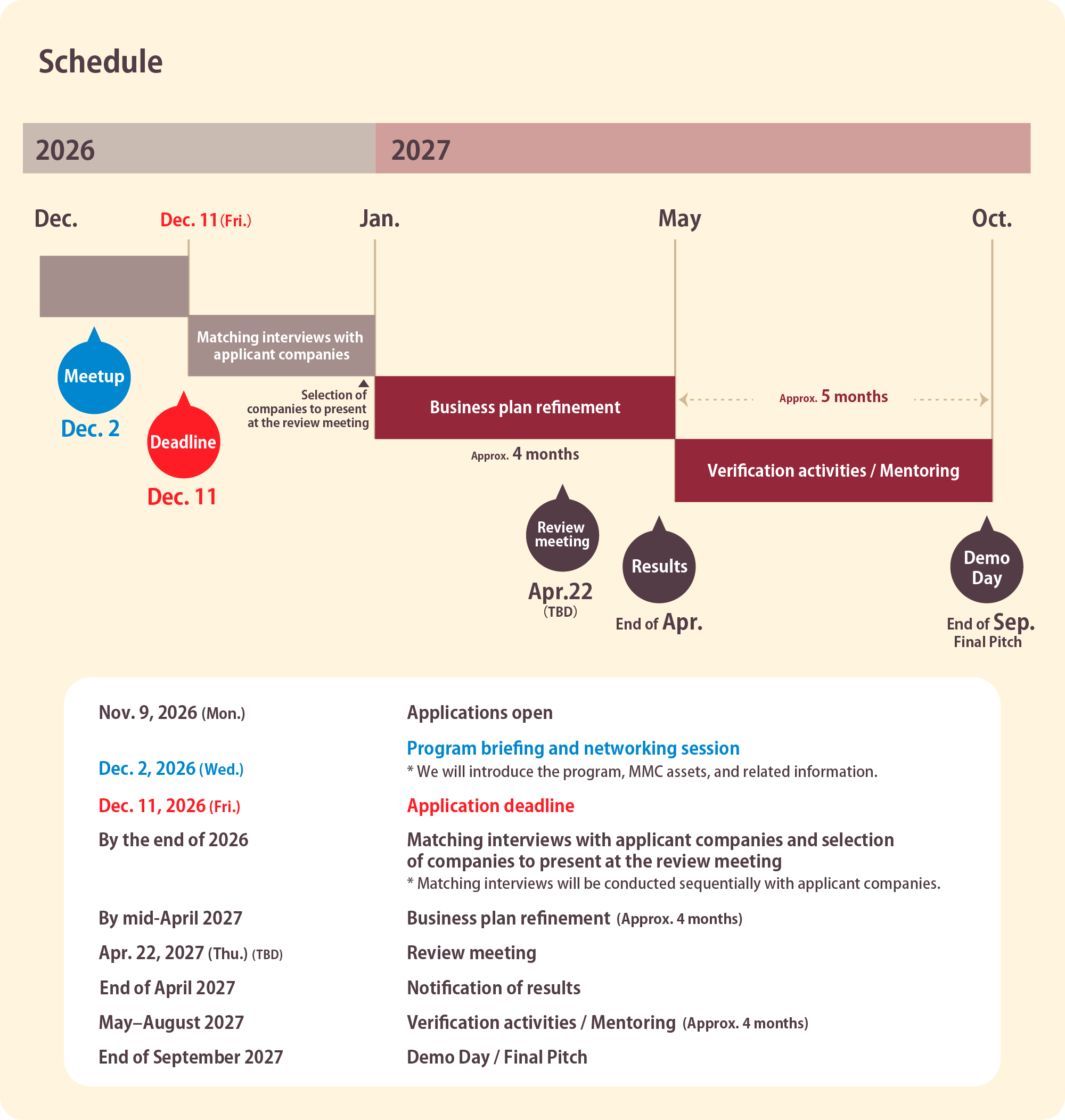
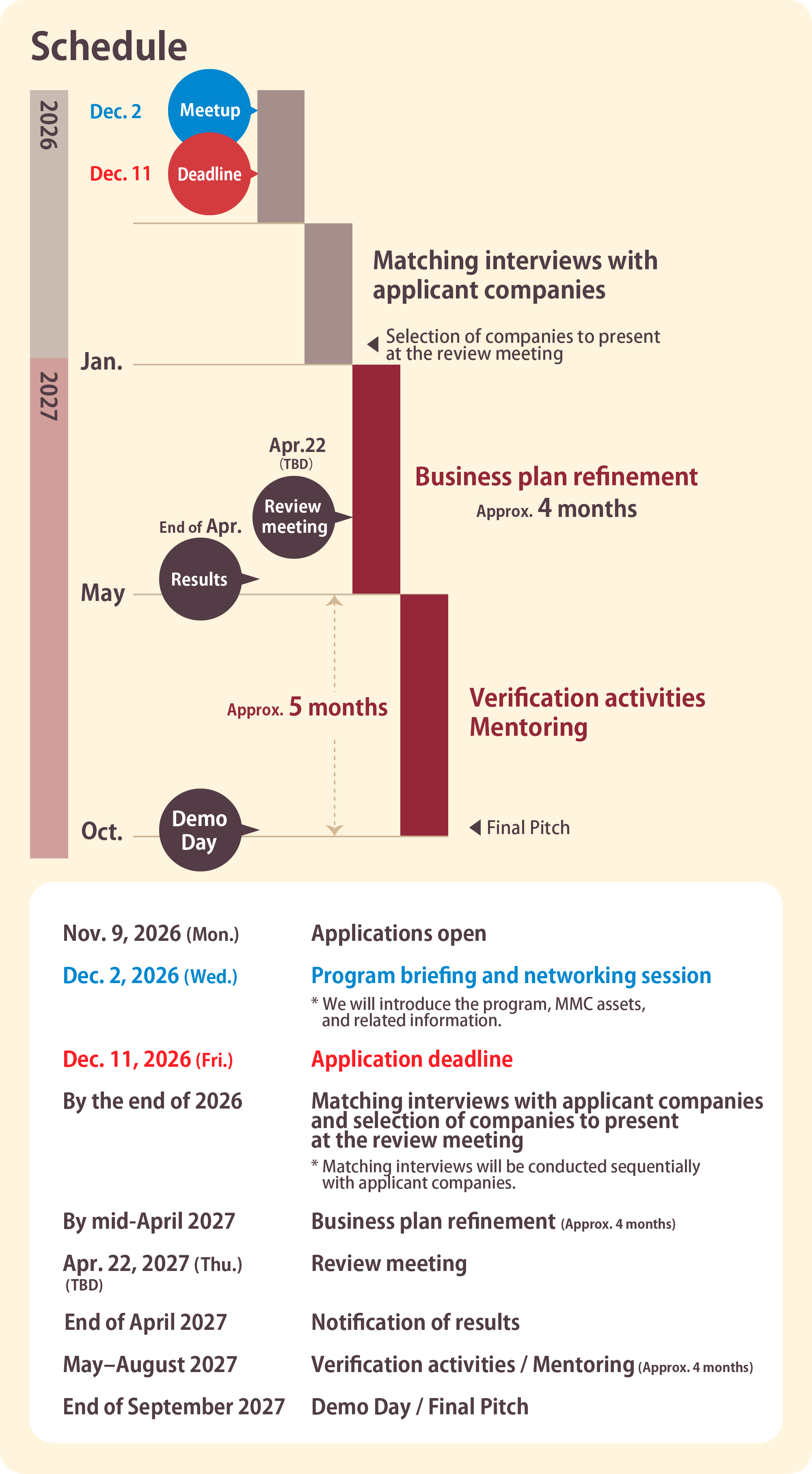
Applicants must be able to commit the necessary resources to verification activities from mid-January 2027 at the latest through the end of September 2027.
* Business stage, location, age, gender, and nationality are not restricted.
How to Apply
Please click the “Entry” button on this page, complete the required fields in the application form, and submit it.
Review Process
Review flow: After the application deadline, document screening will be conducted, followed by interviews by early January.
Notification of results: Results of document screening and interviews will be communicated by mid-January.
* Depending on the results of document screening, interviews may not be conducted. Thank you for your understanding.
* Companies that apply before the deadline may be prioritized for interview screening.
Other Information
* Applicants who pass the interview screening will work with MMC to develop business proposals and PoC plans, present at the review meeting scheduled for late April 2027, and undergo an interim review.
* Applicants selected at the review meeting will conduct PoC activities and present at Demo Day / the final pitch at the end of September 2027, after which commercialization will be considered.
* Multiple themes may be submitted by a single legal entity.
The following types of plans are not eligible:
Content related to gambling, politics, religion, antisocial activities, or other matters contrary to public order and morals.
Content that violates laws and regulations.
Selection Criteria for Themes and Partners
Themes and partners will be selected through a comprehensive review of factors including synergy with MMC, business uniqueness, applicable technology areas, experience and track record, and the feasibility and planning of commercialization.
We will respect all ideas submitted by applicants and will not disclose them externally without permission.
If company information or other details are to be made public, we will confirm the content with you in advance.
At the application stage, however, confidentiality agreements are not assumed solely to protect the business idea itself.
Please take appropriate care when submitting confidential information. If a confidentiality agreement or similar arrangement becomes necessary after selection at the review meeting, we will respond in good faith on a case-by-case basis.
Mitsubishi Materials is a non-ferrous metals manufacturer that produces copper-based non-ferrous metal materials as well as high-value-added functional materials and products. Guided by its vision of “Designing circulation for people, society and the earth, and realizing a sustainable society,” MMC contributes to a circular society by recycling waste resources through advanced recycling technologies.
UNIDGE is a strategic subsidiary of AlphaDrive specializing in open innovation support. Drawing on AlphaDrive’s experience supporting new business creation at more than 100 major companies and across over 12,000 projects, UNIDGE helps companies make collaboration a natural strategic option and maximize the potential of people, technologies, and organizations.