Renewable Energy Business

Business Overview
The Renewable Energy business of Mitsubishi Materials combines a diverse mix of power sources — primarily geothermal, hydroelectric, and solar — to develop an energy infrastructure that supports both stable power supply and decarbonization. Geothermal power generation is a particular strength of the Company, with development records among the leading in Japan at sites such as Onuma, Sumikawa, Wasabizawa, and Appi, supported by subsurface exploration expertise that enables stable power generation. Hydroelectric power generation continues to provide a stable, long-term supply, mainly in Akita Prefecture. In addition, Mitsubishi Materials is expanding solar power generation by utilizing company-owned land, while also conducting studies of company-owned forests in Hokkaido and the Tohoku region as potential sites for wind power generation.

Business Objectives and Strategies
To realize a decarbonized society, the Company has set a long-term goal of achieving power generation equivalent to our internal electricity consumption and are advancing the identification and development of new sites, with a focus on geothermal energy. The Company is proceeding with geothermal development surveys in Hokkaido, Tohoku, and other areas to secure potential new development sites. In wind power generation, surveys are being carried out on company-owned land and other locations with a view to commercialization in the 2030s. The Company is building a comprehensive renewable energy strategy that simultaneously achieves decarbonization, stable supply, and resource circulation by expanding the self-consignment model in solar power generation and improving efficiency in hydroelectric power generation by upgrading aging facilities.
Topics
Geothermal: A New Step Born from the Accumulation of Challenges — Appi Geothermal Power Plant Begins Operation

Having long been engaged in large-scale geothermal development — one of the few such efforts in Japan — Mitsubishi Materials developed the Appi Geothermal Power Plant as a major project following the Wasabizawa Geothermal Power Plant. Construction was carried out together with Mitsubishi Gas Chemical and J-POWER in Hachimantai, Iwate Prefecture, an area characterized by severe natural conditions with snow accumulation of 4 to 5 meters, and commercial operation began in 2024. Geothermal power offers the advantage of a stable supply and is expected to serve as a baseload renewable energy source. The subsurface resource exploration expertise cultivated by the Company is now beginning to lead steadily to the next generation of geothermal development.
Hydroelectric Power: First New Construction in 70 Years Marks a Return to the Roots of Renewable Energy

Hydroelectric power is also the origin of power generation that works in harmony with nature. In Akita Prefecture, the Komatagawa New Power Plant, the first newly constructed hydroelectric power plant in approximately 70 years, commenced operation in 2022. This system, which generates electricity by conveying water from the Moriyoshi Dam through an approximately 8.5km tunnel, is a symbolic project that reaffirms the value of hydroelectric power in terms of long service life and high stability. It represents an initiative to pass on our Company's more than 100-year history of hydroelectric power to the future while giving due consideration to the local river environment.
Solar Power: Effective Use of Former Mine Assets — First Self-consignment Solar Power Plant

The Torinooku Solar Power Plant (Asago City, Hyogo Prefecture) was developed by making effective use of a waste rock dump, the former Akenobe Mine. The generated electricity is supplied to the Akashi Plant (Akashi City, Hyogo Prefecture), a cutting tool manufacturing base, using a self-consignment system (electricity generated in-house is supplied to another site via the power company's transmission and distribution network). As a result, part of our electricity consumption can be covered by solar power generation.
The Challenge of New Geothermal Development: The Forefront of Exploration to Unravel the Unknown Underground
Geothermal energy is an energy source with development risks inherent to underground resources. With support from JOGMEC, the Company is advancing surveys in multiple regions, including Hokkaido and Tohoku. In some locations, high-temperature zones exceeding 300°C have been confirmed, raising expectations for new development. Geothermal energy is at the core of power generation expansion, and these early‑stage exploration efforts will shape the future of power supply a decade from now.


History
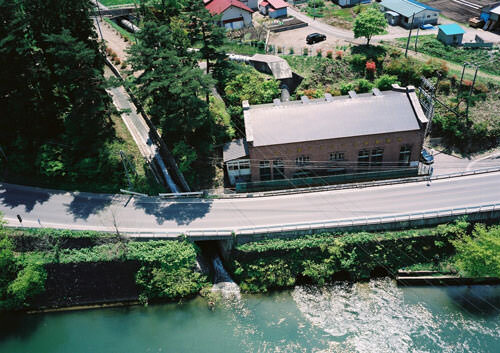 Ikari Hydroelectric Power Station
| 1898 | Started operation of the Nagata Hydroelectric Power Station (starting point of the Renewable Energy business) |
|---|---|
| 1907 | Established the Ikari Hydroelectric Power Plant |
| 1974 | Started operation of Onuma Geothermal Power Plant (entry into geothermal business) |
| 1992 | Established Akita Power Generation Co., Ltd. |
| 1994 | Established Hachimantai Geothermal Corporation |
| 1995 | Started operation of the Sumikawa Geothermal Power Plant |
| 2010 | Established Yuzawa Geothermal Power Corporation |
| 2013 | Established LM Sun Power Co., Ltd. (entry into solar power business) |
| 2013-17 | Started operation of the Makabe, Fukui, Torigoe, Irikama, and Yabuki Solar Power Plants |
| 2019 | Started operation of the Wasabizawa Geothermal Power Plant |
| 2021 | Established Hachimantai Green Energy Co., Ltd. |
| 2022 | Started operation of the Komatagawa New Power Plant |
| 2024 | Started operation of the Appi Geothermal Power Plant |
| 2025 | Started operation of the Torinooku Solar Power Plant |
Operational Locations

Major Affiliated Companies
- Hachimantai Green Energy Co. Ltd.Operation and maintenance of hydroelectric and geothermal power generation facilities
- Appi Geothermal Energy CorporationGeothermal resource development and electricity supply business
- Yuzawa Geothermal Power CorporationDevelopment and supply of geothermal resources and electricity supply business